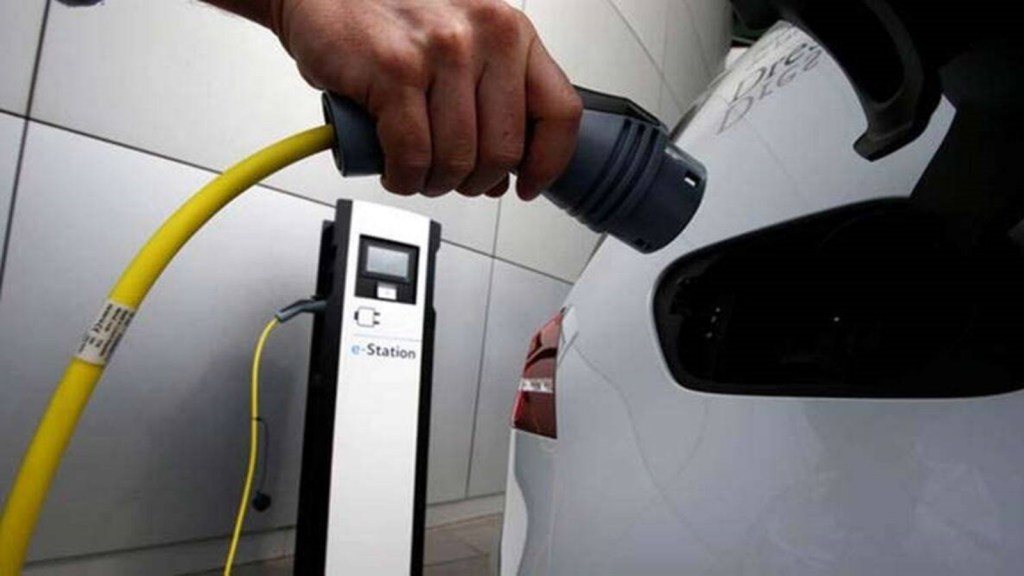

Hybrids reached 9.44% of India's PV market in September 2026, up from 7.30% a year ago, as petrol's share fell below 42% for the first time, per FADA data.
How Much Market Share Do Hybrids Control in India Now? H1 FY27 Sales Data Shows Petrol's Decline
Hybrids controlled 9.44% of India's passenger vehicle market in September 2026, up from 7.30% in September 2025 — a gain of more than two percentage points in a single year — according to FADA retail registration data analysed by ETAuto. That headline sits inside a broader story: petrol's share of the passenger vehicle (PV) market fell from 45.95% in April 2026 to 41.27% in September, while CNG, hybrids and EVs collectively crossed 41%, effectively matching petrol for the first time in India's automotive history.
The table below captures the full fuel-mix shift across H1 FY27 (April–September 2026), with year-ago comparisons where available.
| Fuel Type | Apr '26 | Sep '26 | Sep '25 | YoY Change (pp) | Key models driving growth |
|---|---|---|---|---|---|
| Petrol/Ethanol | 45.95% | 41.27% | 47.18% | −5.91 | Maruti Baleno, Swift, Alto K10 |
| Diesel | 17.39% | 17.74% | 17.76% | −0.02 | Mahindra Scorpio N, XUV 7XO |
| CNG/LPG | 22.62% | 23.11% | 22.02% | +1.09 | Maruti Dzire CNG, Ertiga CNG, Victoris CNG |
| Hybrid | 8.27% | 9.44% | 7.30% | +2.14 | Maruti Grand Vitara, Toyota Hyryder, Honda City e:HEV |
| EV | 5.77% | 8.45% | 5.74% | +2.71 | Tata Nexon EV, MG Windsor, Maruti e Vitara |
Source: FADA retail registration data via ETAuto and The Indian Express. Figures are share of total PV retail registrations.
Two patterns emerge immediately. Diesel has remained remarkably stable — its share barely moved over the entire 12-month period, suggesting that diesel buyers form a structurally distinct cohort rather than a swing group. Hybrids are growing despite receiving almost none of the policy tailwinds that EVs enjoy: a 5% GST applies to EVs, while hybrids attract 28% GST plus a cess, pushing their effective tax burden to 40–48%, comparable to ICE vehicles.
Why is petrol losing share so quickly?
Petrol is defined here as conventional internal-combustion-engine vehicles running on petrol or E20 ethanol blends, without any electrification. The category's decline is structural, not cyclical.
FADA CEO Saharsh Damani told ETAuto that "petrol is losing share, not buyers" — in July, petrol registrations still grew about 4%, but the overall market grew 19%, CNG grew 38%, and EVs grew over 80%. Absolute numbers continue rising; it is the relative position that is collapsing.
Running-cost economics drive the shift. Petrol prices at pumps rose by ₹7–11 across cities following the West Asia conflict that began in February 2026, according to The Indian Express. That price shock sharpened the per-kilometre cost advantage of CNG, hybrids and EVs at exactly the moment when all three categories had more model options than ever before.
Damani also flagged a structural irony: "Practically every CNG car and petrol hybrid runs on the same E20 petrol, and these are the categories gaining share. Diesel, the one fuel without ethanol, has not gained." The ethanol-blending controversy that was supposed to deter petrol buyers appears to have accelerated their migration to CNG and hybrids rather than to diesel.
Petrol's share could dip below 40% in an individual month, Damani has said — a threshold that would have seemed implausible just two years ago.
What exactly is a hybrid, and which types are on sale in India?
A hybrid vehicle combines an internal-combustion engine with at least one electric motor and a battery, using the electric component to improve fuel efficiency, reduce emissions, or both. India's market currently has three distinct hybrid types:
Strong hybrid systems allow the electric motor to propel the vehicle on battery power alone for meaningful distances at urban speeds, without any external charging. The Toyota–Maruti self-charging architecture used in the Grand Vitara, Urban Cruiser Hyryder, Invicto and Innova Hycross is the dominant example in India. Honda's City e:HEV also qualifies. These cars can switch between petrol-only, electric-only and combined modes automatically.
Plug-in hybrid (PHEV) represents a strong hybrid with a larger battery that can be recharged from an external power source, extending the electric-only range significantly. No mainstream PHEV is currently on sale in India's mass market at volume, though several are under evaluation.
Mild hybrid systems employ an electric motor that assists the engine during acceleration and recovers energy during braking, but cannot drive the vehicle on electricity alone. Maruti Suzuki markets its mild-hybrid system as Smart Hybrid. Models carrying this system include the XL6 petrol and the Fronx 1.0 turbo. The fuel-efficiency gain is real but modest — typically 5–10% over a comparable non-hybrid variant — and buyers should not expect electric-only driving from these cars.
The FADA hybrid share data (9.44% in September) encompasses all three types, but strong hybrids from the Toyota–Maruti alliance and Honda are the primary volume contributors in the four-wheeler PV segment.
How big is Maruti Suzuki's role in India's hybrid growth?
Maruti Suzuki is the single largest contributor to India's hybrid passenger vehicle volumes, operating across both strong hybrid and mild hybrid segments simultaneously — a breadth no other manufacturer currently matches.
Strong hybrids from Maruti include the Grand Vitara strong hybrid (co-developed with Toyota, sharing the platform with the Urban Cruiser Hyryder), which is the volume leader in the mid-size hybrid SUV segment. Maruti claims an ARAI fuel efficiency of 27.97 km/l for the Grand Vitara strong hybrid — a manufacturer claim that real-world tests typically place at 18–22 km/l in mixed driving. The Invicto strong hybrid, Maruti's rebadged version of the Toyota Innova Hycross, extends the strong hybrid proposition into the MPV segment. For buyers considering these, our guide to 7-seater hybrid MUVs under ₹30 lakh covers the Invicto in detail.
Mild hybrids from Maruti carry the Smart Hybrid badge on the XL6 petrol and Fronx 1.0 turbo. The integrated starter-generator assists the engine and enables idle stop-start, but cannot drive the car on electricity alone. Buyers should be clear on this distinction before comparing them against strong hybrids.
CNG hybrids represent a new category. The Autocar India H1 2026 bestseller data shows the Maruti Victoris CNG as a new entrant in the CNG top 10, with 38,806 units sold in H1 2026 — a brand-new model with no prior-year comparison. The Victoris is Maruti's CNG-focused MPV, and its rapid sales uptake reflects how CNG and hybrid categories are both benefiting from the same running-cost anxiety among buyers.
Maruti's strategy, as noted by ETAuto, combines CNG and strong hybrids with BEVs like the e Vitara — a multi-powertrain hedge that no rival currently matches at comparable scale. The e Vitara sold 8,572 units in H1 2026, making it the seventh-best-selling EV in the country in its launch half-year.
The Grand Vitara strong hybrid's boot space is reduced by the battery pack to approximately 265 litres — noticeably smaller than the 373-litre boot of the petrol-only variant. The price premium is also real: strong hybrid variants start roughly ₹2–3 lakh above equivalent petrol trims, and the effective GST burden (40–48%) means the government is not subsidising this choice the way it does EVs. Buyers in states without specific hybrid road-tax concessions bear the full tax cost.
How do the key hybrid models compare on price, efficiency and type?
| Model | Hybrid Type | ARAI Claim | Starting Price (approx.) | Key Weakness |
|---|---|---|---|---|
| Maruti Grand Vitara (strong hybrid) | Strong hybrid | 27.97 km/l (mfr. claim) | ₹19.0 lakh | Reduced boot (~265 L), price premium over petrol |
| Toyota Urban Cruiser Hyryder (strong hybrid) | Strong hybrid | 27.97 km/l (mfr. claim) | ₹19.5 lakh | Same platform as Grand Vitara; limited dealer reach vs Maruti |
| Honda City e:HEV | Strong hybrid | 26.5 km/l (mfr. claim) | ₹20.0 lakh | Sedan body limits SUV-hungry buyers; no diesel option |
| Toyota Innova Hycross (strong hybrid) | Strong hybrid | 21.1 km/l (mfr. claim) | ₹24.0 lakh | Higher price; no 4WD option |
| Maruti Invicto (strong hybrid) | Strong hybrid | 23.24 km/l (mfr. claim) | ₹25.0 lakh | Premium over Innova Hycross for badge difference |
| Maruti Fronx 1.0 Turbo (Smart Hybrid) | Mild hybrid | ~21.5 km/l (mfr. claim) | ₹9.5 lakh | Cannot drive on electricity alone; modest efficiency gain |
| Maruti XL6 (Smart Hybrid) | Mild hybrid | ~20.97 km/l (mfr. claim) | ₹12.0 lakh | Mild hybrid label can mislead buyers expecting EV-like running |
Prices are approximate ex-showroom and subject to change. ARAI figures are manufacturer claims; real-world efficiency is typically 15–25% lower in mixed urban-highway driving.
For buyers weighing strong hybrids against each other, our best hybrid cars under ₹25 lakh guide has a detailed breakdown.
How does hybrid growth compare to EV growth in H1 FY27?
EVs are growing faster in percentage terms: EV share rose from 5.77% in April to 8.45% in September, a gain of 2.68 percentage points, versus hybrids' gain of 1.17 percentage points over the same period. In September year-on-year terms, EVs gained 2.71 percentage points versus hybrids' 2.14 percentage points.
Hybrids are growing from a higher base and without policy support. The Indian Express analysis notes that hybrids "rake up just one-fourth of the sales seen across EVs due to higher taxes and lower government incentives" — a striking observation given that hybrids held 9.44% share versus EVs at 8.45% in September. The gap between the two is narrower than the tax disparity would suggest, which points to genuine consumer appetite for strong hybrids as a no-compromise, no-charging-infrastructure-needed alternative.
In the four-wheeler EV segment, Autocar India's H1 2026 data shows the MG Windsor EV leading with 19,080 units, followed by Mahindra XEV 9S (18,074 units) and Tata Nexon EV (16,567 units). The Maruti e Vitara, launched mid-period, already reached 8,572 units. Strong hybrids were noted as "flat" year-on-year in H1 2026 by Autocar India — suggesting that the September acceleration in hybrid share may reflect a second-half pickup rather than a consistent H1 trend.
The two technologies address different buyer anxieties. CNG appeals to running-cost-conscious buyers, hybrids to customers seeking efficiency without charging dependence, and EVs to consumers willing to make the full transition. These are not competing for exactly the same customer.
In the two-wheeler segment, EVs are growing explosively: Autocar Pro reports that electric two-wheeler registrations crossed 1 million units in H1 FY27, up 73% year-on-year, with September alone hitting 2.03 lakh units at an 85% YoY surge. Hybrid two-wheelers are not a meaningful category in India yet, so the two-wheeler EV boom does not directly affect the four-wheeler hybrid story.
What is driving the shift — is it just fuel prices?
Fuel prices are the proximate trigger, but structural drivers run deeper.
The West Asia conflict pushed petrol prices up ₹7–11 per litre across Indian cities from February 2026 onwards, according to The Indian Express. That increase meaningfully widened the per-kilometre running-cost gap between petrol and alternatives. For a car covering 1,500 km a month at 15 km/l petrol efficiency versus 27 km/l hybrid efficiency, the monthly fuel saving at current prices is approximately ₹3,500–4,500 — enough to recover a ₹2–3 lakh price premium within 5–7 years.
The macro frame involves crude oil imports: India imports more than 85% of its crude oil, making a diversified fuel basket a national economic interest, not just a consumer preference. Every percentage point of hybrid or CNG share that displaces petrol reduces the import bill.
The ethanol-blending controversy — uncertainty around E20 mandates and their effect on engine longevity — may have contributed modestly to petrol's decline, though experts are cautious about overstating this. The fact that CNG and hybrid cars also run on E20 petrol (for their ICE component) and are still gaining share suggests the issue is running cost, not ethanol anxiety per se.
Policy asymmetry is the wild card. Hybrids currently attract 28% GST plus a cess, resulting in an effective tax rate of 40–48% — the same as conventional ICE vehicles. EVs attract just 5% GST, and several state governments offer additional registration concessions. Karnataka, for instance, has offered EV registration fee waivers (check current state government notifications for the latest status, as these policies change). No comparable concession exists for strong hybrids at the national level, though the industry has repeatedly lobbied for a GST reduction to 12% on strong hybrids. If that concession were granted, hybrid share could accelerate sharply.
Which automakers are best positioned as the fuel mix shifts?
The shift is forcing every major automaker to maintain a broader powertrain portfolio rather than betting on a single technology — a capital-intensive reality that favours scale players.
Maruti Suzuki is the most diversified: CNG leadership (seven of the top 10 CNG bestsellers in H1 2026 are Maruti models, per Autocar India), strong hybrid SUVs and MPVs via the Toyota alliance, mild hybrids across its volume hatchback and compact SUV range, and now the e Vitara BEV. No other manufacturer spans all four powertrain types at meaningful volume.
Toyota benefits from the same strong hybrid technology through the Urban Cruiser Hyryder and Innova Hycross. The Hycross's strong hybrid system is the same self-charging architecture as the Grand Vitara's, and Toyota's dealer network adds reach in markets where Maruti is less dominant.
Honda has the City e:HEV (strong hybrid) as its sole hybrid offering in India — a well-regarded car with a 26.5 km/l ARAI claim, but limited to the sedan segment at a time when SUVs dominate growth. Honda's hybrid portfolio breadth is a weakness relative to Maruti-Toyota.
Tata Motors is scaling BEVs aggressively — Nexon EV, Punch EV, Harrier EV, Curvv EV — while also expanding CNG. Its ATLAS platform is designed to support petrol, diesel, iCNG and EV powertrains. Tata has no hybrid offering and has publicly stated it does not plan one, betting instead on a direct petrol-to-EV transition.
Mahindra is scaling new BEV SUVs (XEV 9S, XEV 9e, BE 6) while continuing to rely on diesel for its core Scorpio and Bolero volumes. Like Tata, Mahindra has no hybrid in its current lineup.
Hyundai and Kia are expanding CNG offerings and localising EV production while retaining petrol and diesel as portfolio cores. Neither has a strong hybrid on sale in India currently, though Hyundai's global portfolio includes strong hybrids that could be localised.
Maruti Suzuki and Toyota are the primary beneficiaries of hybrid share growth in the near term. If the GST on strong hybrids is ever reduced, those two manufacturers would capture a disproportionate share of the resulting demand surge.
Is this a structural shift or a temporary spike?
The data suggests structural, not cyclical. Several indicators point in the same direction simultaneously.
The trend predates the fuel price spike. Hybrid share was already rising year-on-year before the West Asia conflict: September 2025's 7.30% was higher than the prior year, and the trajectory was consistent. The fuel price increase accelerated an existing trend rather than creating a new one.
India's total auto registrations rose 19.4% in H1 FY27, per VAHAN data cited by The Hindu BusinessLine. The overall market is growing, and petrol is growing too in absolute terms — just much more slowly than alternatives. This is a share shift within a growing market, which is a more durable dynamic than a zero-sum substitution.
The product pipeline supports continued alternative-fuel growth. Maruti's e Vitara is a new entrant still ramping up. The Victoris CNG had no prior-year sales to compare against. Strong hybrid variants of upcoming models are in development across the Toyota-Maruti alliance. The supply side is expanding to meet demand.
Charging infrastructure is narrowing the gap that has historically limited EV adoption. India had 52,718 public charging stations as of mid-2026, including 16,561 fast chargers for cars, according to The Indian Express. The ratio of EVs per charger remains high relative to global averages, but coverage in tier-1 and tier-2 cities is improving. As EV infrastructure improves, it may eventually erode the "no charging needed" advantage that strong hybrids currently hold — but that is a medium-term dynamic, not an immediate threat.
The honest uncertainty is whether the festive season (October–November) and subsequent months will sustain September's momentum or reveal it as a seasonal peak. FADA's Damani has flagged this question explicitly. September is typically a strong month for registrations as dealers clear inventory before the festive season. If October and November data show hybrid share holding above 9%, the structural case becomes much stronger.
What does this mean for a buyer choosing between a hybrid and a petrol car today?
For a buyer covering 1,200–1,500 km per month in a mix of city and highway driving, the running-cost arithmetic now clearly favours a strong hybrid over a comparable petrol car, particularly with petrol prices elevated. The ARAI claim of ~28 km/l for the Grand Vitara strong hybrid is a manufacturer figure; real-world efficiency in Indian conditions is typically 18–22 km/l, which is still substantially better than the 14–16 km/l real-world figure for a comparable petrol SUV.
The price premium — roughly ₹2–3 lakh for a strong hybrid over an equivalent petrol variant — is recovered in fuel savings over 4–6 years at current prices, assuming 1,500 km/month and petrol at current pump prices. That payback period is within a typical ownership cycle for most Indian buyers.
Boot space is reduced in strong hybrids (the battery pack takes up floor space), the upfront cost is higher, and the GST treatment means no government subsidy is helping close the price gap. Mild hybrids (Maruti's Smart Hybrid range) offer a lower entry price and no boot-space penalty, but the fuel saving is modest and buyers should not expect electric-only driving.
For buyers specifically interested in the MPV segment, our best hybrid MPVs under ₹15 lakh guide and the mild hybrid MPV comparison cover the Maruti XL6 Smart Hybrid and its competitors in detail. For the compact SUV segment, the hybrid cars under ₹15 lakh guide is the relevant starting point.
Indian consumers are voting with their registrations for lower running costs, and hybrids — particularly strong hybrids — are one of the clearest beneficiaries of that vote. Whether the government eventually aligns its tax policy with that consumer preference is the variable that will determine how fast the 9.44% share figure climbs from here.
Sources
- Alternative Fuel Vehicles India: CNG, Hybrid, and EVs Surge as Petrol Vehicles Decline in India's PV Market, ETAuto
- India auto registrations rise 19.4% in H1FY27 as battle shifts to alternative powertrains - The Hindu BusinessLine
- Alternative-fuel vehicles account for 40% of car sales; EV demand surges amid higher fuel prices - The Indian Express
- Electric Two-Wheeler Registrations Cross 1 Million in H1 FY27 as September Volumes Surge 85% - Autocar Professional
- Top 10 bestselling cars in H1 2026 by powertrain type - Autocar India
- Maruti Suzuki Grand Vitara - Official Page
- Toyota Urban Cruiser Hyryder - Official Page