
Toyota India's 2027 lineup includes a facelifted Innova Hycross strong hybrid, an all-new Fortuner, and a pure electric three-row MPV with up to 525 km claimed range.
Toyota Kirloskar Motor (TKM) has three significant product launches lined up for 2027 — a facelifted Innova Hycross strong hybrid MPV, an all-new third-generation Fortuner SUV, and a pure electric three-row MPV — making it the most consequential year for the brand in India since the original Hycross arrived.
Before diving into each model, here is a snapshot of the key players in India's premium MPV and electric MPV space that these launches will intersect with:
| Model | Hybrid/EV Type | Key Powertrain | ARAI Mileage / Range | Starting Price (ex-showroom) | Honest Weakness |
|---|---|---|---|---|---|
| Toyota Innova Hycross (Hybrid, current) | Strong hybrid (can drive on battery alone) | 1987 cc petrol + e-motor, 183.7 hp combined, e-CVT | 23.24 km/l (ARAI) | ₹31.18 lakh (Hybrid VX 7-seat) | FWD only; premium over petrol variants is significant; boot space reduced by battery pack |
| Maruti Suzuki Invicto (Strong Hybrid) | Strong hybrid (can drive on battery alone) | 2.0L Atkinson-cycle petrol + e-motor, ~186 hp combined, e-CVT | ~23.24 km/l (ARAI, same Toyota-sourced powertrain) | ₹28.89 lakh (approx.) | Rebadged Hycross; identical mechanical limitations; limited dealer reach vs. Toyota |
| Toyota Innova Hycross (Petrol, current) | No hybrid | 1987 cc petrol, e-CVT | ~16.13 km/l (ARAI) | ₹21.70 lakh (Petrol G 7-seat) | No electrification benefit; older feel vs. incoming facelift |
| Kia Carens Clavis EV (expected rival) | Battery electric | Single motor, ~142–172 hp (international spec) | ~400–500 km (claimed, segment estimate) | TBA for India | No hybrid fallback; charging infrastructure dependency |
| Toyota Electric MPV 2027 (upcoming) | Battery electric | Single motor FWD; 142 hp / 172 hp options | ~525 km (manufacturer claim, top variant) | TBA | LFP battery; no AWD option reported; corporate cousin to Maruti YMC EV |
What exactly is the facelifted Innova Hycross, and why does it matter in 2027?
The facelifted Innova Hycross is a mid-cycle update to the third-generation Innova platform — not an all-new vehicle — but the changes extend well beyond cosmetics. Spy shots and reporting from GaadiWaadi reveal a sleeker front end inspired by the ninth-generation Hilux, with reshaped headlamps, a redesigned radiator grille, new fog lamps, revised bumpers, fresh alloy wheel designs, and tweaked tail lamps. Inside, TKM is expected to introduce a 12.3-inch digital instrument cluster, a 12.3-inch touchscreen infotainment system, and higher-capacity USB Type-C ports.
No mechanical changes are expected. The strong hybrid powertrain — a 1,987 cc four-cylinder Atkinson-cycle petrol engine paired with an electric motor, producing a combined 183.7 hp and driving through an e-CVT — carries over unchanged. The ARAI-rated 23.24 km/l remains the benchmark, though Autocar India's real-world testing has recorded 13.1 km/l in city conditions and 16.1 km/l on the highway — a meaningful gap from the ARAI claim that buyers should factor into their calculations.
A strong hybrid, as Toyota defines it, is a system where the vehicle can propel itself on electric power alone at low speeds and during light-load urban driving, without any input from the combustion engine. This differs fundamentally from a mild hybrid, where the battery only assists the engine and cannot independently drive the wheels.
The Innova Hycross strong hybrid currently starts at ₹31.18 lakh for the Hybrid VX 7-seat variant and reaches ₹31.84 lakh for the top-spec Hybrid ZX (O) 7-seat. The facelift is expected in early 2027, and TKM is likely to use the pre-facelift model as a fleet-focused replacement for the Innova Crysta, keeping both generations in the market simultaneously.
The FWD-only layout remains a limitation for buyers seeking all-terrain capability, and the battery pack reduces boot space — practical trade-offs the facelift is unlikely to address.
How does the Maruti Suzuki Invicto strong hybrid fit into this picture?
The Maruti Suzuki Invicto is a badge-engineered version of the Toyota Innova Hycross, built on the same TNGA-C platform and using an identical 2.0-litre strong hybrid powertrain sourced from Toyota. It delivers the same ARAI fuel efficiency of approximately 23.24 km/l and can run on electric power alone.
Strategically, the Invicto gives Maruti Suzuki a foothold in the premium MPV segment without developing a bespoke platform, and it lets buyers who prefer NEXA dealerships or Maruti's service network access Toyota's hybrid technology. Pricing starts around ₹28.89 lakh, making it marginally more accessible than the equivalent Hycross hybrid variant.
The Invicto's weaknesses mirror its Toyota twin — FWD only, reduced boot space due to the hybrid battery, and a price premium that places it well above the petrol-only Hycross variants starting at ₹21.70 lakh. When the facelifted Hycross arrives in early 2027, the Invicto will likely receive a corresponding update, though TKM and Maruti have not confirmed timelines. For buyers exploring 7-seater hybrid MUVs under ₹30 lakh, the Invicto represents the closest entry point to strong hybrid MPV technology in India.
The incoming 2027 Toyota electric MPV, however, shifts the competitive landscape significantly. If Toyota launches a pure electric three-row MPV below the Hycross hybrid's price point, it could cannibalize Invicto demand — a tension that Maruti and Toyota's shared product strategy will need to manage carefully.
What is the all-new third-generation Fortuner, and when is it coming?
The all-new Fortuner is scheduled to debut globally on 1 December 2026, with an India launch expected in the first half of 2027, according to GaadiWaadi. This is a body-on-frame SUV, not a hybrid or electric vehicle, and it sits outside the electrification conversation — but it provides important context for understanding TKM's 2027 product cadence and launch bandwidth allocation.
The third-gen Fortuner will share its front fascia design language with the ninth-generation Hilux, which Toyota has already introduced in India. Upgrades include a 12.3-inch digital instrument cluster, a 12.3-inch touchscreen, electric power steering, a panoramic sunroof, and advanced driver assistance systems (ADAS). The engines, transmissions, and 4WD system are expected to remain broadly similar to the current model — a diesel-petrol lineup without a hybrid option, at least at launch.
For buyers specifically interested in hybrid technology, the Fortuner's 2027 arrival is less directly relevant than the Hycross facelift or the electric MPV. It does signal, however, that TKM is running three simultaneous launch tracks in 2027, an unusually heavy product pipeline for a single year.
What is Toyota's electric MPV for India, and how does it compare to rivals?
The Toyota electric MPV is the most consequential of the three 2027 launches for India's electrification story. It is a pure battery electric vehicle — not a hybrid — with a three-row layout and front-wheel-drive single-motor configuration. It is a corporate cousin of Maruti Suzuki's pure electric MPV, internally codenamed 'YMC', which is expected to arrive in the first half of 2027, slightly ahead of the Toyota version.
GaadiWaadi reports that the Toyota electric MPV will likely be offered in two variants:
- A base variant with 142 hp and 193 Nm of torque, paired with a 48.8 kWh LFP (lithium iron phosphate) battery pack.
- A top variant with 172 hp and 193 Nm of torque, paired with a 61.1 kWh LFP battery pack, with a claimed range of approximately 525 kilometres on a single charge.
LFP batteries — lithium iron phosphate cells — prioritise cycle life, thermal stability, and lower cost over energy density compared to NMC (nickel manganese cobalt) alternatives. They suit India's climate well but result in a heavier battery pack for the same range compared to NMC cells. The 525 km figure is a manufacturer claim and should be treated as an ideal-condition number; real-world range in Indian urban traffic will likely fall in the 380–430 km bracket based on comparable LFP EVs tested in India.
The primary competitor is the Kia Carens Clavis EV, already positioned in the three-row electric MPV space. The Toyota electric MPV's advantage will likely be the brand's service network and the shared platform with the Maruti YMC EV, which could bring parts commonality and cost efficiencies. The disadvantage is that it arrives in the second half of 2027, after the Maruti version, meaning Kia and Maruti will have had months to establish themselves in the segment.
No AWD variant has been reported for the Toyota electric MPV, which limits its appeal for buyers wanting all-weather or all-terrain capability. This is a segment-wide limitation — the Carens Clavis EV is also expected to be FWD only — but it deserves stating plainly.
How does the Maruti Suzuki hybrid MPV strategy interact with Toyota's 2027 electric MPV?
This is where the Suzuki-Toyota alliance creates an interesting strategic tension. Maruti Suzuki currently fields the Invicto as its strong hybrid MPV — a rebadged Hycross — while simultaneously developing the YMC pure electric MPV for a first-half 2027 launch. Toyota will then follow with its own electric MPV in the second half of 2027.
The two companies are running parallel tracks: strong hybrid MPVs (Hycross + Invicto) for buyers who want efficiency without charging infrastructure dependency, and pure electric MPVs (YMC + Toyota EV) for buyers ready to commit to home or public charging. This dual-track approach reflects the reality of India's market, where charging infrastructure remains uneven outside major metros.
For the Invicto specifically, the arrival of the YMC EV at a lower price point could create internal competition within the Maruti lineup. If the YMC EV is priced aggressively — say, below ₹25 lakh — it could draw buyers away from the Invicto strong hybrid, which starts closer to ₹29 lakh. Maruti has not confirmed YMC pricing, so this remains speculative, but it is a tension the brand will need to manage.
The Economic Times has reported that around half a dozen small hybrid vehicles are being prepared for India by multiple automakers — including Maruti Suzuki, Hyundai, Toyota, and Renault — over the next 18–24 months, driven by the 18% GST applicable to sub-four-metre cars and tightening CAFE 3 norms. This broader market context suggests that the Invicto and Hycross strong hybrids are not the end of Toyota and Maruti's hybrid MPV ambitions; they are the current generation while the next wave of affordable hybrids takes shape.
For buyers exploring best hybrid MPVs under ₹15 lakh or mild hybrid MPVs, neither the Hycross nor the Invicto qualifies in those price brackets — both are premium products. Maruti's mild hybrid lineup, which carries the Smart Hybrid badge and includes models like the XL6 petrol, uses a belt-integrated starter-generator that assists the engine but cannot drive the wheels independently. This is a different system from the strong hybrid in the Invicto and Hycross, and buyers should not conflate the two.
What does the 2027 Toyota launch timeline mean for buyers deciding now?
If you are considering a Hycross strong hybrid purchase in late 2026 or early 2027, the facelift timing is the most immediate consideration. The pre-facelift model is likely to see discounting or attractive offers as TKM clears inventory ahead of the updated version's arrival in early 2027. The mechanical package — including the strong hybrid powertrain with its 23.24 km/l ARAI rating — is unchanged, so buyers who prioritise running costs over the latest infotainment may find the current model a better value.
For buyers interested in the electric MPV space, the second half of 2027 is a long wait. The Maruti YMC EV in the first half of 2027 will be the first look at the shared platform, and its real-world range, charging speed, and pricing will serve as the best available proxy for what the Toyota version will offer. Waiting for the Toyota badge may bring a marginally different equipment list or pricing, but the core powertrain and battery options are expected to be identical.
The all-new Fortuner's first-half 2027 arrival is relevant primarily for buyers in the body-on-frame SUV segment. It does not carry a hybrid powertrain in its initial specification, so buyers seeking strong hybrid SUVs will continue to look at the Urban Cruiser Hyryder strong hybrid or the Grand Vitara strong hybrid — both of which use a 1.5-litre Toyota-sourced strong hybrid system with an ARAI rating of around 27.97 km/l — rather than the Fortuner.
What is the competitive context for Toyota's electric MPV against BYD and Kia?
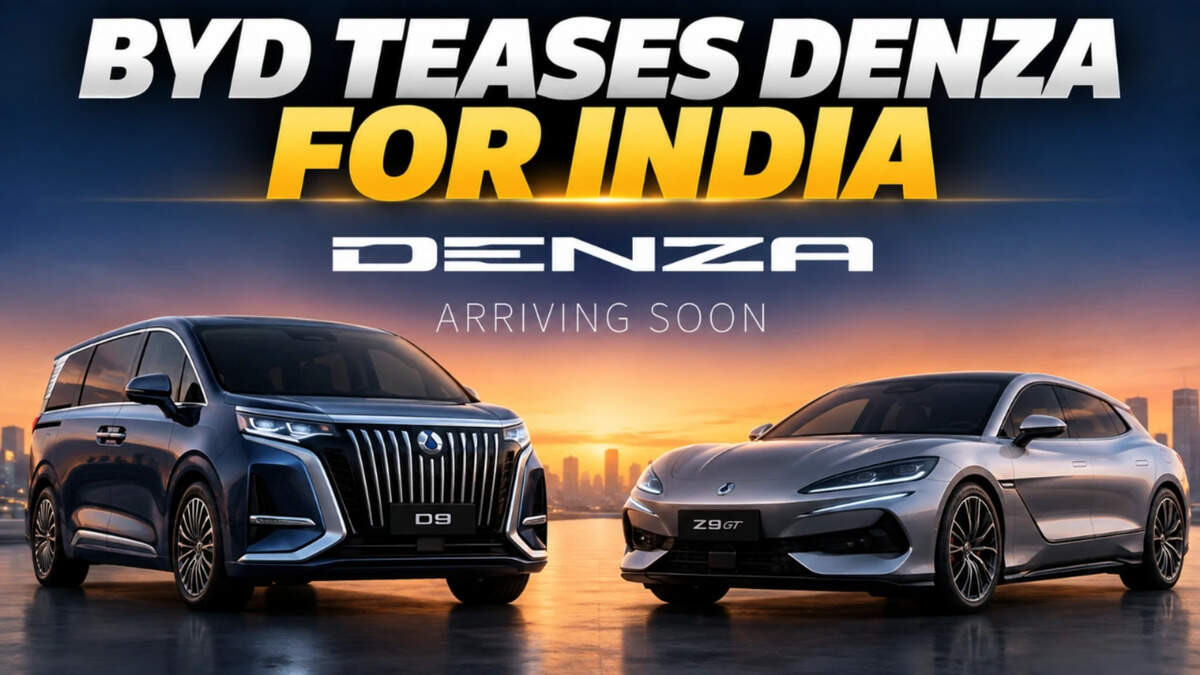
The three-row electric MPV segment in India is taking shape quickly. The Kia Carens Clavis EV is the most direct rival to the Toyota electric MPV, and BYD has teased its premium Denza brand for India, with the Denza D9 luxury MPV among its international products. The D9 is offered internationally with both electric and plug-in hybrid powertrains, though BYD has not confirmed which variant or powertrain will come to India, or at what price point.
A plug-in hybrid, as defined by the Society of Automotive Engineers, is a vehicle with a battery large enough to provide meaningful all-electric range that can be recharged from an external power source — the grid — in addition to the combustion engine. This differs from both the strong hybrid (which charges its battery through regenerative braking and the engine, not the grid) and the mild hybrid (which cannot drive on electricity alone). If Denza brings the D9 PHEV to India, it would occupy a different niche from the Toyota electric MPV, offering buyers the flexibility of electric-only urban driving with a combustion engine for longer trips, without full charging infrastructure dependency.
For the Toyota electric MPV, the 525 km claimed range (top variant, manufacturer claim) is competitive on paper, but the LFP battery's real-world performance in Indian summer temperatures — where cabin cooling loads are high — will be the true test. Buyers in cities like Chennai, Hyderabad, or Ahmedabad should treat the range claim conservatively.
Should you wait for the 2027 Toyota launches or buy now?
The answer depends on which of the three launches is relevant to your needs.
For the Innova Hycross strong hybrid: if you need a premium three-row MPV now and the current infotainment setup is acceptable, the pre-facelift model at a negotiated price is a reasonable buy. The powertrain is unchanged in the facelift, so you are not missing out on efficiency gains — only cosmetic and tech updates.
For the all-new Fortuner: if you are in the market for a body-on-frame SUV, waiting for the December 2026 global debut to see the full specification before committing makes sense. India pricing and variant details will become clearer in early 2027.
For the electric MPV: this is a genuinely new product category for Toyota in India, and first-generation electric vehicles in any new segment carry some uncertainty around software maturity, charging network support, and resale values. The Maruti YMC EV, arriving first, will serve as an early indicator. Buyers who are not in a hurry and want a three-row EV would be well-advised to wait for real-world ownership data before committing.
Across all three launches, the broader trend is clear: Toyota and Maruti Suzuki are deepening their shared platform strategy in India, using the alliance to cover both the strong hybrid MPV segment (Hycross + Invicto) and the emerging electric MPV segment (Toyota EV + YMC) simultaneously. For buyers who want the best first hybrid car on a budget, neither the Hycross nor the Invicto qualifies — but the YMC EV and its Toyota twin could, depending on final pricing, represent the most accessible three-row electrified MPVs India has seen.
The 2027 product calendar is the most significant year for electrified MPVs in India's automotive history — and Toyota is at the centre of it on two separate fronts.
Sources
- 3 Major Toyota Launches Planned In 2027 - What Are They? | GaadiWaadi
- Toyota Innova HyCross Hybrid ZX (O) 7 seat Specs, Features & Price | Autocar India
- Toyota Motor Corporation: Latest News | The Economic Times
- BYD Teases Denza For India; Premium EV Brand Set To Expand Beyond BYD | TOI Auto
- Toyota Kirloskar Motor — Official India Site
- Maruti Suzuki Invicto — Official India Site