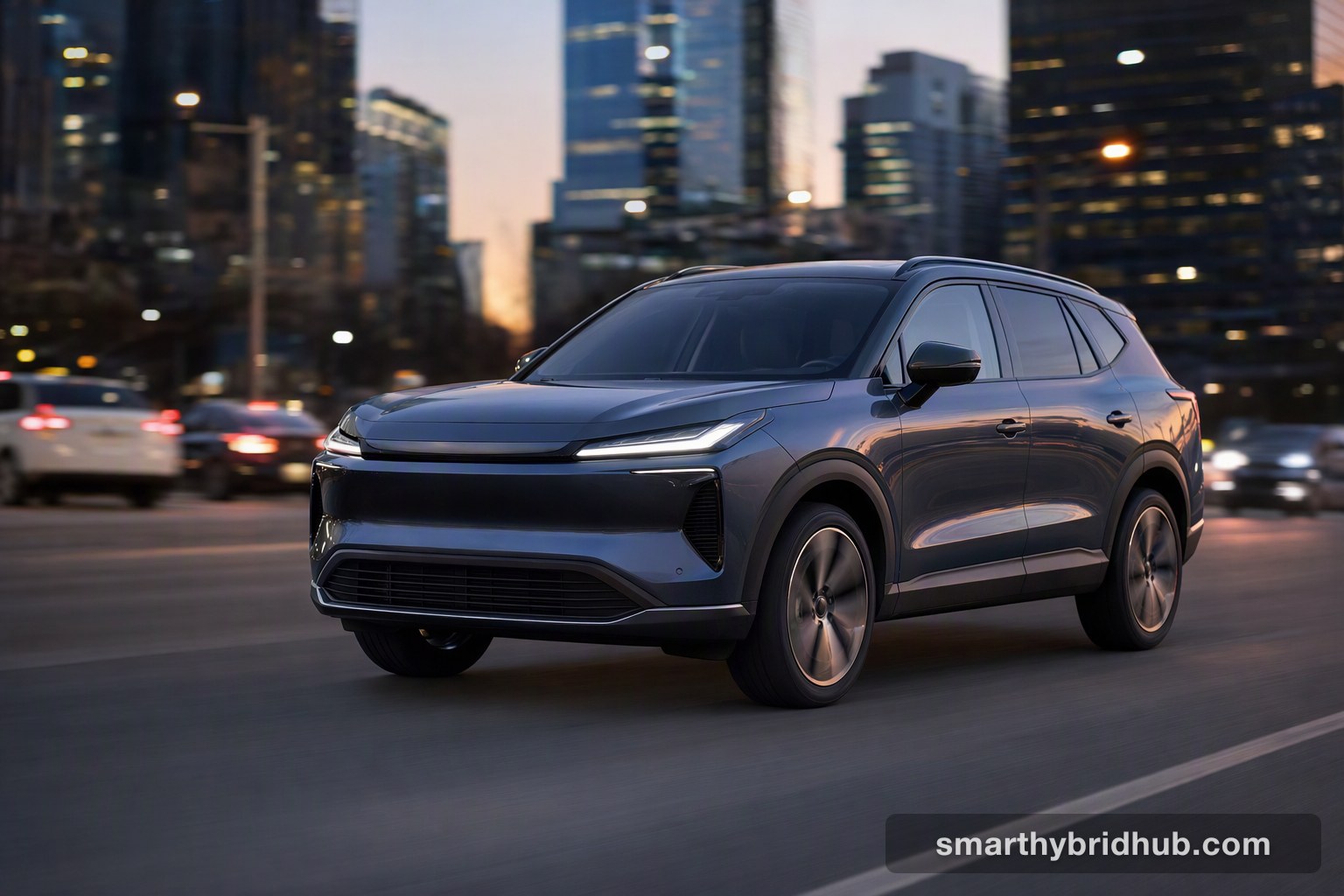
Cheapest Strong Hybrid SUVs in India (2026)
The entry strong hybrid variant returns exactly the same mileage as the most expensive one, so if efficiency is what you are buying, buy the cheapest variant that has it. On the Victoris, Rs 3.56 lakh separates the Rs 16.43 lakh VXI THS from the Rs 19.99 lakh ZXI+ (O) Strong Hybrid, and the 28.65 km/l figure does not move. The saving over a mild hybrid is real but city-dependent: Toyota rates the Hyryder strong hybrid at 27.97 km/l against 21.12 km/l for the NeoDrive manual, and that gap narrows sharply on an open highway.
The cheapest strong hybrid SUV in India is the Maruti Suzuki Victoris VXI THS 2W at Rs 16.43 lakh ex-showroom, the lowest published price for any variant carrying a full strong hybrid system. Three SUVs offer one at all: the Victoris, the Maruti Suzuki Grand Vitara and the Toyota Urban Cruiser Hyryder. Every strong hybrid variant across all three sits under Rs 20 lakh, and all three claim close to 28 km/l.
That is a recent change. A strong hybrid, which can run on electric power alone at low speed and recharges itself without plugging in, used to start well above Rs 20 lakh. The entry variant now gets you the whole system. What you pay above it buys equipment, not efficiency.
Key takeaways
- The Victoris VXI THS 2W at Rs 16.43 lakh is the cheapest way into a strong hybrid SUV.
- The Victoris is also the most efficient of the three at a claimed 28.65 km/l, against 27.97 km/l for the Grand Vitara and Hyryder.
- The entry strong hybrid variant delivers identical mileage to the top one. On the Victoris, Rs 3.56 lakh separates the cheapest strong hybrid from the dearest, and the fuel economy figure does not move.
- All three are front-wheel-drive five seaters with an e-CVT. None of them needs plugging in.
- Maruti publishes variant-level prices for the Victoris. For the Grand Vitara it publishes a range and the top variant, and Toyota publishes no ex-showroom prices at all, so the ladders below are uneven by necessity.
The three strong hybrid SUVs compared
| Model | Entry strong hybrid variant | Strong hybrid price range | Claimed mileage | System output |
|---|---|---|---|---|
| Maruti Suzuki Victoris | VXI THS 2W, Rs 16.43 lakh | Rs 16.43 lakh to Rs 19.99 lakh | 28.65 km/l | 92.45 PS engine plus 80 PS motor |
| Maruti Suzuki Grand Vitara | Delta+ | Model range Rs 10.77 lakh to Rs 19.77 lakh, with the strong hybrid Alpha+(O) at Rs 19.72 lakh | 27.97 km/l | 115.56 PS total |
| Toyota Urban Cruiser Hyryder | Hybrid S | Not published by Toyota | 27.97 km/l | 115.56 PS total |
| Prices are ex-showroom Delhi, read from each manufacturer's own price list in October 2026. Mileage and powertrain figures come from each model's official brochure. |
1. Maruti Suzuki Victoris
The cheapest strong hybrid SUV on sale, the most efficient of the three, and the only one whose full price ladder Maruti publishes variant by variant.
Strong hybrid variants and prices:
- VXI THS 2W: Rs 16,42,900
- ZXI Strong Hybrid: Rs 17,84,900
- ZXI (O) Strong Hybrid: Rs 18,43,900
- ZXI+ Strong Hybrid: Rs 19,51,900
- ZXI+ (O) Strong Hybrid: Rs 19,98,900
Hybrid system: A 1,490 cc M15D petrol engine making 92.45 PS and 122 Nm, paired with an 80 PS, 141 Nm motor and a 177.6 V lithium-ion pack, through an e-CVT driving the front wheels.
Mileage: 28.65 km/l claimed, the highest of any SUV sold in India.
What the VXI THS gets you: six airbags, ESP with hill hold, tyre pressure monitoring, rear camera and sensors, ISOFIX mounts, automatic climate control with rear vents, cruise control and push-button start.
What it does not: the wireless charger, ventilated seats, head-up display, powered driver seat and 360-degree camera all arrive at ZXI or above, which is the Rs 1.57 lakh step to the ZXI Strong Hybrid.
Safety: 5 stars at Bharat NCAP, 31.66 of 32 for adults and 43.00 of 49 for children, and 5 stars at Global NCAP, 33.72 of 34 and 41.00 of 49. The best-rated car of the three.
2. Maruti Suzuki Grand Vitara
The same idea with a wider range beneath it, since the Grand Vitara also sells as a petrol and a CNG from Rs 10.77 lakh.
Strong hybrid variants: Delta+, Zeta+, Zeta+(O), Alpha+ and Alpha+(O). The brochure's feature grid lists these five as the strong hybrid column; everything else in the range is the 1,462 cc petrol.
Prices: NEXA publishes a model range of Rs 10.77 lakh to Rs 19.77 lakh and names the strong hybrid Alpha+(O) at Rs 19,72,400. It does not publish the individual price of each strong hybrid variant, so the Delta+ figure has to come from a dealer.
Hybrid system: A 1,490 cc engine at 68 kW, or 92.45 PS, with a 59 kW motor, for 85 kW, or 115.56 PS, of total system power through an e-CVT.
Mileage: 27.97 km/l claimed.
What arrives where: Delta+ is the entry strong hybrid. Ventilated front seats, the wireless charger, rear door sunshades and Auto Purify with PM 2.5 start at Zeta+, and the head-up display, 8-way powered driver seat and 360 View Camera at Alpha+. The panoramic sunroof is an (O) item.
Safety: Six airbags as standard across the range, ESP with hill hold, tyre pressure monitoring. The Grand Vitara has no Bharat NCAP result.
3. Toyota Urban Cruiser Hyryder
Mechanically the Grand Vitara's twin, with the same hybrid system and the same mileage figure, and a simpler three-grade hybrid lineup.
Strong hybrid grades: S, G(O) and V.
Prices: Toyota does not publish ex-showroom prices for the Hyryder on its Indian website. Ask a dealer for the S figure specifically if you want the cheapest route in.
Hybrid system: The 1,490 cc engine at 68 kW, or 92.45 PS, with a 59 kW motor for 85 kW, or 115.56 PS, of total system power, through what Toyota calls an e-Drive transmission.
Mileage: 27.97 km/l claimed, against 21.12 km/l for the NeoDrive mild hybrid manual.
What arrives where: the wireless charger and panoramic sunroof come on the Hybrid G(O) and V. Ventilated front seats also start at G(O) on the hybrid, and the 8-way electric driver seat is a V item. The S is the stripped entry point.
Safety: Six airbags. The Hyryder has no Bharat NCAP result.
Is the strong hybrid worth the money?
Run the arithmetic before you decide, because the answer depends almost entirely on where you drive.
On the Hyryder, Toyota's own figures put the strong hybrid at 27.97 km/l against 21.12 km/l for the NeoDrive mild hybrid manual. That is roughly a third less fuel for the same distance. On the Grand Vitara the comparison is 27.97 against 21.11 km/l, effectively identical.
The important detail is where that saving comes from. A strong hybrid shuts the engine off and runs on the motor at low speed, which is exactly what happens in stop-start traffic. On an open highway at a steady 80 km/h the engine runs most of the time and the gap narrows sharply. A city driver recovers the premium far faster than a highway driver, and the brochure figure flatters the highway case.
Worth knowing too: the entry variant is not a compromised version of the hybrid. The VXI THS returns the same 28.65 km/l as the ZXI+ (O) Strong Hybrid costing Rs 3.56 lakh more. If efficiency is what you are buying, buy the cheapest variant that has it.
How to choose
Start with the entry strong hybrid variant of each, list what it includes, and only then look at the step up. On the Victoris that step is well defined and published: Rs 16.43 lakh for the VXI THS, Rs 18.00 lakh for the ZXI Strong Hybrid, and what you get for the difference is the wireless charger, the 360-degree camera and the better screen.
If a Bharat NCAP rating matters to you, the choice narrows to one. The Victoris holds 5 stars at 31.66 of 32; neither the Grand Vitara nor the Hyryder has been tested.
If you want the strong hybrid with all-wheel drive, none of these three offers it. The Victoris and Grand Vitara sell AllGrip only with the petrol engine, and the Hyryder's AWD is a NeoDrive manual.
For a broader look, see our guides to strong hybrid SUVs under 25 lakh and strong hybrid mid-size SUVs.
Frequently asked questions
Which is the cheapest strong hybrid SUV in India?
The Maruti Suzuki Victoris VXI THS 2W, at Rs 16,42,900 ex-showroom. It is the lowest published price for any strong hybrid SUV variant sold here, and the Victoris is also the most efficient of the three at a claimed 28.65 km/l.
What is the cheapest Grand Vitara strong hybrid variant?
The Delta+. NEXA publishes a Grand Vitara range of Rs 10.77 lakh to Rs 19.77 lakh and names the strong hybrid Alpha+(O) at Rs 19,72,400, but does not list each strong hybrid variant separately, so ask a dealer for the Delta+ price.
Which strong hybrid SUVs can I buy under Rs 20 lakh?
All three. Every strong hybrid variant of the Victoris, Grand Vitara and Urban Cruiser Hyryder is priced below Rs 20 lakh. See our list of strong hybrid SUVs under 25 lakh, or widen the budget with strong hybrid SUVs under 30 lakh.
Which cheap strong hybrid SUV has the lowest running cost?
The Victoris, on fuel economy alone, at a claimed 28.65 km/l against 27.97 km/l for the other two. Our guide to the strong hybrid SUV with the lowest running cost looks past the brochure figure at servicing and insurance.
Is a strong hybrid more efficient than a mild hybrid?
Substantially, in city driving. Toyota rates the Hyryder strong hybrid at 27.97 km/l and the NeoDrive mild hybrid manual at 21.12 km/l. A mild hybrid cannot move the car on electric power alone, so it never switches the engine off while rolling. See the most fuel-efficient hybrid SUVs in India for the full comparison.
Are these mid-size SUVs?
Yes, all three are five-seat mid-size SUVs, and the Grand Vitara and Hyryder are mechanical twins. Our roundup of strong hybrid mid-size SUVs covers the category in more depth.
Prices were read from each manufacturer's own price list and powertrain and equipment figures from each model's official brochure, with crash scores from Bharat NCAP and Global NCAP, in October 2026. Toyota does not publish ex-showroom prices on its Indian website, and NEXA publishes a range rather than a variant-by-variant list for the Grand Vitara, so this article gives variant prices only where the manufacturer publishes them. Prices are ex-showroom Delhi and vary by city, variant and date. Confirm with your dealer before buying.
Last verified: 2026-10-12