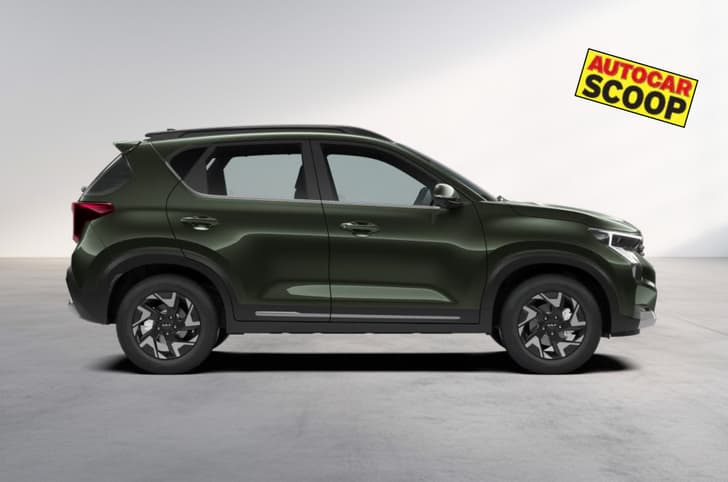

No sub-4m hybrid SUV is on sale in India today; the Maruti Fronx strong hybrid is the nearest confirmed launch (2026–27), while the Kia Sonet hybrid arrives only in 2028–29.
Which Compact Hybrid SUVs Are Launching in India 2026–27?
The Indian sub-4-metre SUV segment — one of the country's highest-volume car categories — is on the verge of its first wave of strong-hybrid entrants, with Maruti Suzuki's Fronx strong hybrid positioned as the earliest confirmed arrival (expected 2026–27), while Kia's next-gen Sonet will launch in 2027 on a new platform but will only receive its strong hybrid in 2028 or 2029, and Toyota's Urban Cruiser Hyryder continues to hold the strong-hybrid fort in the slightly larger B+ segment just above this class.
Before diving into each model's roadmap, here is a snapshot of where every key player stands today and where they are headed:
| Model | Hybrid Type | Current Status (Oct 2026) | Hybrid Launch ETA | ARAI Mileage (Hybrid) | Starting Price (Hybrid) | Key Weakness |
|---|---|---|---|---|---|---|
| Maruti Suzuki Fronx (strong hybrid) | Strong hybrid | Not yet on sale | 2026–27 (expected) | TBA (manufacturer claim pending) | TBA | No confirmed specs or price yet |
| Maruti Suzuki Fronx 1.0T (current) | Mild hybrid (Smart Hybrid) | On sale | Already available | ~21.5 km/l (ARAI) | ~₹8.5 lakh (ex-showroom) | Battery only assists; cannot drive on electric alone |
| Kia Sonet (next-gen, 2027) | ICE at launch; strong hybrid later | Launching 2027 | 2028–29 | TBA | Expected ~₹8.5 lakh (base) | Hybrid delayed 1–2 years after platform launch |
| Toyota Urban Cruiser Hyryder | Strong hybrid | On sale (B+ segment, ~4.3m) | Already available | 27.97 km/l (ARAI) | ~₹19.5 lakh (ex-showroom) | Above sub-4m segment; higher price |
| Maruti Grand Vitara | Strong hybrid | On sale (B+ segment, ~4.3m) | Already available | 27.97 km/l (ARAI) | ~₹19.5 lakh (ex-showroom) | Boot space reduced by battery pack |
Prices are indicative ex-showroom figures based on available market data. ARAI figures are manufacturer claims and real-world mileage will be lower.
What exactly is a strong hybrid, and why does it matter for compact SUVs?
A strong hybrid is defined as a powertrain system in which the electric motor is powerful enough to propel the vehicle on battery power alone — without the combustion engine running — typically at low speeds and in urban stop-go traffic. This differs fundamentally from a mild hybrid (which Maruti markets as Smart Hybrid), where the electric motor only assists the combustion engine and cannot independently drive the wheels.
For the compact SUV segment, this distinction carries real weight. The typical Indian buyer here — urban, commuting 30–60 km daily — stands to gain the most from the electric-only crawl capability that strong hybrids deliver. In dense city traffic, a strong hybrid can cut fuel consumption by 25–35% compared with a pure-petrol equivalent, whereas a mild hybrid typically delivers only 5–8% improvement under the same conditions.
The Maruti Suzuki Fronx currently sold in India uses the 1.0-litre BoosterJet turbo-petrol engine paired with a Smart Hybrid (mild hybrid) system. This system uses a lithium-ion battery to provide torque assist during acceleration and enables idle stop-start, but the car cannot move on electric power alone. The ARAI-claimed mileage for this variant is approximately 21.5 km/l — respectable, but a long way from what a strong hybrid can achieve.
The incoming Fronx strong hybrid would be a different product, likely borrowing the 1.5-litre Atkinson-cycle petrol engine and integrated starter-generator motor architecture already proven in the Grand Vitara and the Toyota Urban Cruiser Hyryder. That combination returns 27.97 km/l on the ARAI cycle in those larger siblings.
What is Maruti Suzuki's plan for the Fronx strong hybrid?
Maruti Suzuki has not made a formal public announcement with a confirmed launch date for the Fronx strong hybrid as of October 2026, but the model has been widely reported as part of the company's electrification roadmap for the 2026–27 financial year. The strategic logic is clear: the Fronx competes directly with the Kia Sonet, Hyundai Venue, Tata Nexon, and Mahindra XUV 3XO in the sub-4-metre segment, and none of those rivals currently offers a strong hybrid. Being first to market with a strong hybrid in this volume segment would be a significant competitive advantage.
Maruti Suzuki's existing strong-hybrid experience comes from the Grand Vitara (strong hybrid), which it co-developed with Toyota and which shares its powertrain with the Urban Cruiser Hyryder. The Grand Vitara strong hybrid is on sale from approximately ₹19.5 lakh (ex-showroom), and benefits of up to ₹3.10 lakh were being offered on it in September 2026, suggesting the company is managing inventory as it prepares the next phase of its hybrid push.
Adapting that strong-hybrid system to the Fronx's smaller, lighter body is technically non-trivial. The Grand Vitara's hybrid battery pack occupies a portion of the boot floor, reducing luggage space — a weakness that Maruti will need to address differently in the Fronx's more compact body. If the same trade-off applies, the Fronx strong hybrid's boot volume will be smaller than the standard Fronx's 308 litres, which is already modest by segment standards.
Pricing is the other critical variable. The Grand Vitara strong hybrid commands roughly a ₹4–5 lakh premium over its base petrol variant. If a similar premium applies to the Fronx, the strong hybrid version could be priced between ₹13 lakh and ₹15 lakh (ex-showroom), which would place it in a different competitive bracket from the current Fronx range. At that price, it would need to justify itself against the Maruti Grand Vitara strong hybrid itself, as well as the Toyota Urban Cruiser Hyryder — both of which are larger, more spacious cars.
The Maruti Suzuki Invicto (strong hybrid MPV) and the Grand Vitara strong hybrid have already demonstrated that Indian buyers will pay a premium for genuine strong-hybrid efficiency, particularly in states that offer road-tax concessions on hybrid vehicles. For instance, buyers in states like Uttarakhand have historically received registration benefits on strong hybrids, though buyers should verify current state-level policies directly with their RTO, as these change.
When is the next-gen Kia Sonet launching, and will it have a hybrid?
The second-generation Kia Sonet — internally codenamed QY2E — is confirmed for a 2027 launch, according to Autocar India's sources. The new model will move from the current K2 platform to the newer K1 architecture, the same base that underpins the Kia Syros and the new Hyundai Venue. This is a meaningful upgrade: the K1 platform supports over-the-air software updates, remote diagnostics, and a stronger structural frame using more ultra-high-strength steel. Both the K1-based Syros and the new Venue have scored five stars in Bharat NCAP crash tests.
The platform change will also allow Kia to address one of the current Sonet's most persistent criticisms: cramped rear-seat space. The new Venue gained a 20mm longer wheelbase at 2,520mm, and the next-gen Sonet is expected to follow suit.
However — and this is the critical point for hybrid buyers — the strong hybrid powertrain will not be available at the Sonet's 2027 launch. Kia's CEO Ho Sung Song confirmed at the 2026 CEO Investor Day that hybrid powertrains for the Sonet and Carens Clavis would arrive by 2029. Autocar India's sources narrow that window to 2028 or 2029. The 2027 Sonet will launch with the familiar trio of engines: an 83hp 1.2-litre naturally aspirated petrol, a 120hp 1.0-litre turbo-petrol, and a 116hp 1.5-litre diesel.
The strong hybrid being developed for the Sonet is expected to be based on a 1.5-litre naturally aspirated petrol engine — similar in concept to the setup being developed for the Kia Seltos hybrid (due 2027). Technical specifications remain under wraps. Kia is targeting annual production of around 85,000 units for the next-gen Sonet, which gives a sense of the volume ambitions behind this platform investment.
For a buyer considering the Kia Sonet today and hoping for a hybrid: the earliest realistic date is 2028, and 2029 is more probable. That is a two-to-three year wait from now.
Where does the Toyota Urban Cruiser Hyryder fit in this picture?
The Toyota Urban Cruiser Hyryder is a strong hybrid — defined here as a system capable of propelling the vehicle on electric power alone at low speeds — and it is the closest production benchmark for what a compact strong-hybrid SUV can deliver in India. Its ARAI-claimed fuel efficiency of 27.97 km/l is the highest of any non-plug-in SUV currently on sale in the country.
However, the Hyryder measures approximately 4.37 metres in length, placing it firmly in the B+ or mid-size compact SUV segment, not the sub-4-metre category where the Fronx and Sonet compete. Its starting price for the strong hybrid variant is around ₹19.5 lakh (ex-showroom), which is roughly double the entry price of the current Fronx or Sonet.
The Hyryder's strong-hybrid system uses a 1.5-litre Atkinson-cycle petrol engine paired with a nickel-metal hydride battery and an integrated motor. The car can travel short distances — typically under 2 km — on electric power alone, and the system smoothly blends petrol and electric power in mixed driving. Real-world fuel efficiency in urban conditions typically comes in at 20–24 km/l, which is still substantially better than any mild-hybrid or pure-petrol compact SUV.
The Hyryder's weakness, shared with the Grand Vitara strong hybrid, is the battery pack's intrusion into boot space. The hybrid variants of both cars offer a reduced boot volume compared with their mild-hybrid or petrol counterparts — a practical trade-off that buyers should factor in, especially for families who regularly carry luggage.
For buyers who cannot wait for the Fronx strong hybrid and need a hybrid SUV now, the Hyryder and Grand Vitara strong hybrids are the only genuine strong-hybrid SUV options available in India. The AWD and hybrid SUVs under ₹20 lakh guide on SmartHybridHub covers these in more detail.
What about the Maruti Fronx's current mild-hybrid — is it worth buying now?
The current Maruti Suzuki Fronx with the 1.0-litre BoosterJet turbo-petrol and Smart Hybrid system is a mild hybrid. Mild hybrid is defined as a powertrain where the electric motor and battery assist the combustion engine — reducing load and improving efficiency — but cannot drive the wheels independently. Maruti's Smart Hybrid system uses a lithium-ion battery to provide torque fill during low-speed acceleration and enables idle stop-start functionality.
The ARAI-claimed mileage for the Fronx 1.0T Smart Hybrid is approximately 21.5 km/l. Real-world figures in mixed urban-highway driving typically come in at 14–17 km/l, depending on driving style and traffic conditions — a meaningful gap from the ARAI number, as is common with turbocharged mild hybrids.
The Fronx 1.0T is priced from approximately ₹8.5 lakh (ex-showroom) for the base turbo variant, making it one of the more affordable turbocharged compact SUVs in India. Its strengths include a punchy engine, a well-equipped cabin, and Maruti's extensive service network. Its weaknesses include the mild-hybrid system's limited fuel-saving impact in real-world urban driving, and the fact that buyers who wait 12–18 months may access a far more efficient strong-hybrid version of the same car.
For buyers who need a car now and cannot wait, the Fronx 1.0T Smart Hybrid is a sensible choice — particularly given Maruti's resale value and service network advantages. For buyers with flexibility, waiting for the strong hybrid makes financial sense if the price premium can be recovered through fuel savings within a reasonable ownership period.
The best hybrid cars under ₹15 lakh guide on SmartHybridHub provides a broader view of what mild-hybrid options are available at this price point today.
How does the Kia Sonet's hybrid timeline compare with what Kia is doing across its India range?
Kia's hybrid push in India is more ambitious than the Sonet alone. At the 2026 CEO Investor Day, Ho Sung Song confirmed a multi-model hybrid rollout: the Seltos hybrid is due in 2027, the Sonet and Carens Clavis hybrids are targeted by 2029, and the Carnival strong hybrid is confirmed for launch in 2026 itself. By 2030, Kia plans to have 10 models in India, of which eight will be electrified (hybrid or EV).
The Kia Seltos hybrid — due 2027 — is expected to use a strong-hybrid system based on a 1.5-litre naturally aspirated petrol engine. The Seltos competes with the Maruti Grand Vitara and Toyota Urban Cruiser Hyryder in the mid-size compact SUV segment, so its hybrid will be a direct rival to those cars. When the Sonet hybrid arrives in 2028–29, it is expected to use a similar or derivative system scaled for the smaller platform.
The Kia Carnival strong hybrid — confirmed for 2026 — uses a 1.6-litre turbo-petrol engine paired with a hybrid system producing a combined 242hp and 367Nm, sent to the front wheels via a 6-speed automatic. This is a global-spec system and positions the Carnival as a premium strong-hybrid MPV. For those interested in the MPV segment, the best 7-seater hybrid MUV under ₹30 lakh guide covers the broader space.
Kia is also developing a locally made B-segment electric SUV, positioned between the Syros and Seltos in size (approximately 4.2 metres), which will be Kia's entry into the growing midsize electric SUV space. This is separate from the hybrid roadmap but signals that Kia is building out a full electrification portfolio for India rather than relying on a single technology path.
What should a buyer do right now — wait or buy?
This depends entirely on individual circumstances, but the data points to a clear framework.
If you need a sub-4-metre SUV today and fuel efficiency is your priority, the Maruti Fronx 1.0T Smart Hybrid (mild hybrid) is the most efficient option currently available in the segment, but its real-world gains over a comparable pure-petrol car are modest. The Hyundai Venue and Kia Sonet do not currently offer any hybrid variant.
If you can wait 12–18 months and want a genuine strong hybrid in the compact SUV segment, the Maruti Fronx strong hybrid is the most likely first-mover, with a probable launch window of late 2026 to mid-2027. No confirmed specifications or pricing are available yet, and Maruti has not made a formal announcement as of October 2026.
If you can wait until 2027 and want the next-gen Kia Sonet platform — with better safety, more rear space, and modern electronics — but are not specifically seeking a hybrid, the 2027 Sonet makes sense. If you want the Sonet hybrid specifically, you are looking at 2028–29 at the earliest.
If you want a strong hybrid SUV available right now and can stretch your budget to ₹19–21 lakh, the Toyota Urban Cruiser Hyryder (strong hybrid) or Maruti Grand Vitara (strong hybrid) are the only genuine options. Both return 27.97 km/l (ARAI) and can drive on electric power alone in urban traffic. Both also have reduced boot space due to the battery pack — a real-world weakness that should factor into the decision for families. The best hybrid cars under ₹25 lakh guide covers these and other options in that price band.
One factor worth monitoring: several Indian states offer road-tax or registration concessions on strong hybrids. Buyers in states with such policies — verify current rules with your state RTO, as policies change — can meaningfully reduce the effective price premium of a strong hybrid over a petrol equivalent, improving the payback period on the higher upfront cost.
What is the competitive space likely to look like by 2028–29?
By the time the Kia Sonet strong hybrid arrives in 2028–29, the sub-4-metre hybrid segment will look very different from today. The Maruti Fronx strong hybrid will likely have been on sale for 18–24 months, establishing a price benchmark. The Hyundai Venue — which shares the K1 platform with the next-gen Sonet — may also receive a hybrid variant in a similar timeframe, given Hyundai's own electrification commitments.
The Tata Nexon, which currently leads the sub-4-metre segment in sales volume, offers an EV variant (Nexon EV) but no hybrid. Tata Motors has been more focused on battery-electric vehicles than hybrids, so a Nexon hybrid is not currently on the roadmap. The Mahindra XUV 3XO similarly does not have a confirmed hybrid plan.
This means that by 2027–28, the strong-hybrid sub-4-metre segment could effectively be a two-horse race between the Maruti Fronx strong hybrid and the next-gen Kia Sonet (with its hybrid arriving later). That is a significant first-mover advantage for Maruti if it executes on schedule.
The broader context is that India's hybrid car market is growing rapidly. The success of the Grand Vitara strong hybrid, the Urban Cruiser Hyryder, and the Honda City e:HEV (strong hybrid sedan, ARAI claim: 26.5 km/l) has demonstrated that Indian buyers will pay a premium for genuine hybrid efficiency, particularly as petrol prices remain elevated. The City e:HEV, priced from approximately ₹20 lakh, is a strong hybrid defined by its ability to run on electric power alone at speeds up to around 80 km/h under light load — a capability that has resonated strongly with urban buyers.
The compact SUV segment's sheer volume — the Sonet, Venue, Brezza, and Nexon collectively account for hundreds of thousands of units annually — means that even a modest hybrid penetration rate represents a large absolute number of vehicles. That is why every major player is now investing in hybrid-compatible platforms for this segment, even if the actual hybrid powertrains are still 12–36 months away.
Summary: The 2026–29 compact hybrid SUV timeline at a glance
The sub-4-metre hybrid SUV segment in India is about to move from a gap in the market to a genuine product category. The Maruti Suzuki Fronx strong hybrid is the nearest confirmed arrival, expected in the 2026–27 window, and will be the first strong hybrid in the segment if it launches on schedule. The next-gen Kia Sonet arrives in 2027 on the K1 platform with improved safety and more space, but its strong hybrid will only follow in 2028 or 2029. The Toyota Urban Cruiser Hyryder remains the benchmark for strong-hybrid efficiency in the adjacent B+ segment, with 27.97 km/l (ARAI) and proven real-world performance — but at a price and size that puts it in a different bracket.
For buyers today, the honest answer is that no sub-4-metre strong hybrid SUV exists yet. The Fronx Smart Hybrid (mild hybrid) is available and efficient, but it is not a strong hybrid. Patience — or a willingness to step up to the Grand Vitara or Hyryder — is the only way to access genuine strong-hybrid technology in an SUV body right now.
Sources
- Next-gen Kia Sonet launch in 2027 - Autocar India
- Kia confirms Sonet, Carens Clavis hybrids by 2029 - Autocar India
- New Kia Sonet 2027 – New Platform, More Space & Hybrid Plan - India Car News
- Kia confirms Sonet, Carens Clavis hybrids for India - Team-BHP
- Benefits of up to Rs 3.10 lakh on Maruti Grand Vitara in September 2026 - Autocar India
- Maruti Suzuki Grand Vitara - Official Page
- Toyota Urban Cruiser Hyryder - Official Page
- Kia Sonet - Official Page
- Upcoming hybrid compact SUVs set to disrupt the Indian auto market - MSN