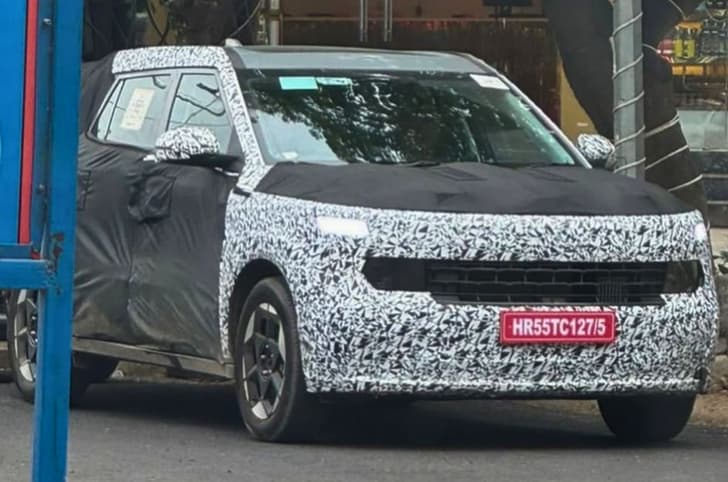

Kia Seltos strong hybrid arrives in 2027 (178 hp, WLTP 14.71 km/l); Kia Carnival hybrid pre-bookings are open; next-gen Hyundai Creta hybrid and a three-row Hyundai SUV hybrid follow, all targeting Maruti's strong hybrid lineup.
Which Hyundai and Kia Hybrids Are Coming to India by 2027? Creta, Seltos, Carnival Roadmap
Hyundai and Kia are preparing at least four strong-hybrid models for India, with the Kia Seltos hybrid confirmed for a 2027 launch and the Kia Carnival hybrid already accepting pre-bookings — a wave of electrified SUVs and MPVs that will land squarely in territory currently dominated by Maruti Suzuki's strong-hybrid lineup.
The table below maps every confirmed or credibly reported model against the incumbents they will challenge. India-specific figures are used where available; global or WLTP figures are labelled as such.
| Model | Hybrid Type | Powertrain (Combined) | Claimed Mileage | Expected India Price / Status | Key Rival |
|---|---|---|---|---|---|
| Kia Seltos Hybrid | Strong hybrid | 1.6L petrol + e-motor, 178 hp total | 14.71 km/l (WLTP; India figure TBC) | ~₹20.49 lakh (expected); 2027 launch | Maruti Grand Vitara / Victoris strong hybrid |
| Kia Carnival Hybrid | Strong hybrid | 1.6L turbo-GDi + e-motor; 180 PS + 73.4 PS | Not yet announced | Pre-bookings open; launch imminent | Toyota Innova Hycross strong hybrid |
| Next-gen Hyundai Creta Hybrid | Strong hybrid (expected) | 1.5L petrol-based hybrid (India spec unconfirmed) | Not yet announced | 2027; price TBC | Maruti Grand Vitara / Toyota Hyryder strong hybrid |
| Hyundai 3-row SUV Hybrid (Ni1i) | Strong hybrid (possible) | Unconfirmed | Unconfirmed | Post-2027; unconfirmed | Mahindra XUV 7XO, Tata Safari |
| Maruti Grand Vitara Strong Hybrid | Strong hybrid | 1.5L Atkinson petrol + e-motor, ~116 hp | 27.97 km/l (ARAI) | ₹17.99–19.99 lakh (approx.) | Kia Seltos Hybrid (incoming) |
| Maruti Victoris Strong Hybrid | Strong hybrid | 1.5L Atkinson petrol + e-motor, ~116 hp | 27.97 km/l (ARAI) | ₹18.99–21.49 lakh (approx.) | Kia Seltos Hybrid (incoming) |
| Toyota Urban Cruiser Hyryder Strong Hybrid | Strong hybrid | 1.5L Atkinson petrol + e-motor, ~116 hp | 27.97 km/l (ARAI) | ₹19.69–25.11 lakh (approx.) | Kia Seltos Hybrid (incoming) |
| Toyota Innova Hycross Strong Hybrid | Strong hybrid | 2.0L Atkinson petrol + e-motor, ~186 hp | 21.1 km/l (ARAI) | ₹24.05–30.98 lakh (approx.) | Kia Carnival Hybrid (incoming) |
ARAI figures are manufacturer claims. Real-world mileage is typically 15–20% lower. WLTP figures are European certification numbers and will differ from India's ARAI test.
What exactly is a strong hybrid, and why does it matter for this story?
A strong hybrid is defined as a powertrain in which the electric motor is powerful enough to propel the car on battery power alone for short distances, without any input from the combustion engine. This differs from a mild hybrid, where the electric motor only assists the engine and cannot independently drive the wheels. Maruti markets its mild-hybrid technology under the Smart Hybrid badge on models like the XL6 and Fronx 1.0 turbo.
Every model in the Hyundai-Kia hybrid roadmap — Seltos, Carnival, Creta, and the unnamed three-row SUV — is being developed as a strong hybrid. They will compete directly with the Maruti Suzuki Grand Vitara, Victoris, and Toyota Urban Cruiser Hyryder (all strong hybrids) rather than with Smart Hybrid mild-hybrid models.
Strong hybrids command a price premium of roughly ₹2–4 lakh over equivalent petrol variants in India's mid-size SUV segment, but they deliver ARAI-certified mileage figures that mild hybrids cannot match. The Grand Vitara's strong-hybrid variant claims 27.97 km/l (ARAI), while its Smart Hybrid mild-hybrid sibling claims around 21.11 km/l (ARAI) — a gap large enough to recover the price premium over five to six years of typical urban use.
What do we know about the Kia Seltos Hybrid, and when will it arrive?
The Kia Seltos hybrid is the most concrete of the four upcoming models. Kia showcased it at the 2026 Paris Motor Show, and Atul Sood, Senior Vice President of Sales and Marketing at Kia India, told Autocar Professional during the second-gen Seltos launch in 2025 that "there is a clear direction that we will introduce a hybrid in the Seltos."
The Paris Motor Show car uses a 1.6-litre naturally aspirated petrol engine producing 102 hp and 141 Nm, paired with an electric motor that develops 129 hp and 388 Nm. Combined output is 178 hp, routed through a 6-speed DCT. The European model has an AWD layout, but Autocar India reports that the India-spec version is expected to come with front-wheel drive — a cost and complexity reduction standard for Indian-market hybrids.
The WLTP-certified mileage for the global model is 14.71 km/l. This should not be treated as the India ARAI claim, which will be tested under different conditions and is typically higher than WLTP for the same car. The India-spec ARAI figure has not been announced.
Autocar India's expected price is approximately ₹20.49 lakh, placing the Seltos hybrid at a meaningful premium over the current top-spec Seltos diesel (around ₹17–18 lakh), but broadly in line with the Maruti Victoris strong hybrid. The Seltos hybrid's interior gets a triple-screen setup, ambient lighting, a head-up display, and a gear stalk on the steering column (freeing up the centre console for extra cup holders) — a layout borrowed from Kia's electric models.
One confirmed weakness: the battery pack sits under the boot floor, eliminating the spare wheel. Buyers who do a lot of highway driving will need to factor in run-flat tyres or a tyre repair kit. This is the same trade-off buyers face with the Grand Vitara and Victoris strong hybrids.
The Seltos hybrid will be Kia's third strong-hybrid model in India after the Sorento and Carnival, arriving as CAFE III norms push automakers toward more electrified powertrains.
What is the Kia Carnival Hybrid, and how does it compare to the Innova Hycross?
The Kia Carnival hybrid is the most immediately available of the four models — pre-bookings are already open in India, with the launch expected soon. It is a strong hybrid MPV using a 1.6-litre turbo-GDi petrol engine producing 180 PS and 265 Nm, paired with an electric motor that adds 73.4 PS and 304 Nm.
It will be sold in India in the top-spec Limousine+ variant, loaded with dual digital displays, Level 2 ADAS, ventilated and heated powered seats, a 360-degree camera, and 8 airbags. Three-row seating is standard.
The natural comparison is the Toyota Innova Hycross strong hybrid, which uses a 2.0-litre Atkinson-cycle petrol engine with a combined output of approximately 186 hp and an ARAI-claimed 21.1 km/l. The Innova Hycross strong hybrid is priced from approximately ₹24.05 lakh to ₹30.98 lakh. The Carnival Hybrid, being a premium import-aligned product in a single top-spec variant, is likely to be priced above this range — exact pricing has not been confirmed.
For buyers considering the MPV segment, our Best 7-Seater Hybrid MUV Under ₹30 Lakh guide covers the current strong-hybrid options in detail.
What is the next-gen Hyundai Creta Hybrid, and how certain is its 2027 launch?
The next-generation Hyundai Creta (internally designated SX3) is confirmed to be in development and has been spied testing in India. It will move from the current K2 platform to the newer K3 platform — the same architecture that underpins the second-generation Kia Seltos. This platform upgrade is expected to bring a longer wheelbase, more cabin space, and a substantially revised interior with Hyundai's Pleos Connect infotainment system.
Mint reports that Hyundai communicated its product roadmap at the CEO Investor Day in 2026, with the new Creta expected to arrive before the new i10 (which is slated for late 2027). A strong-hybrid powertrain is expected to be offered alongside the existing 1.5-litre naturally aspirated petrol, 1.5-litre turbo-petrol, and 1.5-litre diesel options.
The hybrid powertrain for the Creta is described as being based on the existing 1.5-litre petrol engine — which would make it a different system from the Seltos hybrid's 1.6-litre unit, though GaadiWaadi reports that the two models are expected to share hybrid technology. The India-specific powertrain configuration, output figures, and ARAI mileage claim have not been officially announced. Treat any specific numbers circulating online as unverified until Hyundai India makes a formal announcement.
The Creta has crossed 15 lakh cumulative sales in India and is the best-selling midsize SUV in the country. A strong-hybrid variant would give it a direct answer to the Maruti Grand Vitara strong hybrid, which currently claims the segment's highest ARAI mileage figure at 27.97 km/l. Whether the Creta hybrid can match or exceed that figure will be a key battleground when the car launches.
The spy shots reveal a boxier, more upright design with a grille spanning the full width of the front fascia — similar to the Seltos — and a panoramic sunroof. Hyundai is targeting a 5-star Bharat NCAP rating, following the Seltos which has already achieved it.
What is the Hyundai three-row SUV hybrid (Ni1i), and should buyers wait for it?
Hyundai is reportedly developing a three-row SUV under the codename Ni1i, positioned between the Alcazar and the Tucson. A strong-hybrid powertrain is a possibility, but GaadiWaadi notes that Hyundai has not officially confirmed the model's name, engine specifications, or launch date.
This model is the least certain of the four in the roadmap. It represents a potential future competitor to the Mahindra XUV 7XO and Tata Safari in the three-row mid-size SUV space — a segment that currently has no strong-hybrid option from any mainstream Indian brand. If it does arrive with a strong hybrid, it would be a genuinely new entrant in a gap that even Maruti's lineup does not fill.
Buyers looking for a three-row hybrid today are limited to the Toyota Innova Hycross strong hybrid and the Kia Carnival hybrid (incoming). The Hyundai Ni1i remains a watch-this-space story rather than a near-term buying consideration.
How does this challenge Maruti Suzuki's strong-hybrid position?
Maruti Suzuki currently holds the strongest position in India's strong-hybrid SUV segment. The Grand Vitara strong hybrid and the Victoris strong hybrid — both using a 1.5-litre Atkinson-cycle petrol engine paired with an electric motor, co-developed with Toyota — claim 27.97 km/l (ARAI), the highest figure in the mid-size SUV class. Toyota's Urban Cruiser Hyryder uses the same powertrain and claims the same figure.
These cars have benefited from being first movers. The Grand Vitara strong hybrid launched in late 2022, giving Maruti a four-year head start in the segment before the Seltos hybrid arrives. That head start has built service network familiarity, resale value confidence, and a track record of real-world reliability — advantages that new entrants cannot replicate quickly.
However, the Maruti-Toyota strong hybrids have their own weaknesses. Boot space is reduced because the battery sits under the load floor, and the spare wheel is absent. The powertrain is tuned for efficiency rather than performance — the combined output is approximately 116 hp, which feels adequate in city traffic but less so on expressways. The Seltos hybrid's 178 hp combined output would give it a clear performance advantage, assuming the India-spec figures are close to the global model.
Price positioning will be decisive. If the Seltos hybrid lands at ₹20.49 lakh (Autocar India's estimate), it would be broadly comparable to the top-spec Victoris strong hybrid. At that price, buyers will be choosing between Maruti's proven efficiency record and Kia's higher power output and feature set. Neither is an obvious winner — which is exactly the kind of competition that benefits buyers.
For buyers currently evaluating the strong-hybrid segment, our Cheapest Strong Hybrid SUVs in India guide covers the current space in detail.
What is driving this hybrid push from Hyundai and Kia now?
Two regulatory and market forces are converging. First, India's CAFE (Corporate Average Fuel Economy) Phase III norms, which take effect progressively through the late 2020s, require automakers to bring down their fleet-average CO2 emissions. Strong hybrids, which can deliver 25–28 km/l in ARAI testing, contribute significantly to lowering a manufacturer's fleet average without requiring the charging infrastructure that pure EVs demand.
Second, the market has validated strong hybrids in a way that was not certain even two years ago. Renault is preparing to launch the Duster strong hybrid, and the Maruti-Toyota alliance has demonstrated that Indian buyers in the ₹18–22 lakh segment will pay a premium for strong-hybrid efficiency. The Seltos and Creta hybrids are Hyundai-Kia's response to that validated demand signal.
Kia has outlined plans to expand its Indian portfolio to 10 models, with eight electrified vehicles — a strategy that includes both hybrids and EVs rather than treating them as alternatives. This is a more pragmatic approach than pure-EV strategies, given that India's public charging infrastructure remains patchy outside major metro areas.
What should a buyer do right now — wait or buy?
The answer depends on which segment you are in.
If you want a strong-hybrid mid-size SUV today: The Maruti Grand Vitara strong hybrid and Maruti Victoris strong hybrid are the proven choices, with the Toyota Urban Cruiser Hyryder as an alternative on the same platform. All three claim 27.97 km/l (ARAI) and have established service networks. The Honda City e:HEV (strong hybrid sedan) is another option if you prefer a sedan format. Waiting for the Seltos hybrid makes sense only if you can hold off until mid-to-late 2027 and value higher power output over maximum fuel efficiency.
If you want a strong-hybrid MPV: The Kia Carnival Hybrid is the most imminent new entrant, with pre-bookings already open. The Toyota Innova Hycross strong hybrid is the established benchmark. Our Best 7-Seater Hybrid MUV Under ₹30 Lakh guide can help you compare them.
If you are budget-conscious: Strong hybrids in India start at approximately ₹17–18 lakh for the Grand Vitara. Mild hybrids (Maruti Smart Hybrid) are cheaper but do not deliver the same fuel economy gains. See our Best First Hybrid Car to Buy on a Budget guide for a fuller breakdown.
If you need AWD: The Seltos hybrid's India-spec model is expected to drop the AWD option that the European version offers. Current AWD-capable hybrids in India are limited — our AWD and Hybrid SUVs Under ₹20 Lakh guide covers what is available today.
One honest caution: the Hyundai Creta hybrid and the Ni1i three-row SUV hybrid are still unconfirmed in their India-specific specifications. Buying decisions should not be deferred indefinitely on the basis of models that have not received official India launch dates or pricing. The Seltos hybrid and Carnival hybrid are the only two with concrete timelines as of October 2026.
What are the confirmed specifications versus what is still speculation?
It is worth being precise about what is confirmed and what is not, because aggregator portals have a tendency to present expected figures as confirmed facts.
Confirmed:
- Kia Seltos hybrid: showcased at Paris Motor Show 2026; India launch confirmed for 2027 by Kia India's senior leadership; global specs are 1.6L petrol + 129 hp e-motor, 178 hp combined, 6-speed DCT, WLTP 14.71 km/l.
- Kia Carnival hybrid: pre-bookings open in India; powertrain confirmed as 1.6L turbo-GDi (180 PS, 265 Nm) + e-motor (73.4 PS, 304 Nm); Limousine+ variant confirmed.
- Next-gen Hyundai Creta: spied testing in India; K3 platform confirmed; 2027 launch timeline reported by Autocar India and Mint; hybrid variant expected but India-specific specs unconfirmed.
- Hyundai Ni1i three-row SUV: in development; strong hybrid is a possibility; no confirmed name, specs, or launch date.
Not confirmed:
- India ARAI mileage for Seltos hybrid or Carnival hybrid.
- India pricing for Seltos hybrid or Carnival hybrid.
- Creta hybrid powertrain output or mileage.
- Whether the Creta hybrid will share the Seltos's 1.6L unit or use a different 1.5L-based system.
- AWD availability for India-spec Seltos hybrid.
Buyers and media should treat the WLTP figure of 14.71 km/l for the Seltos hybrid as a reference point, not as the India claim. The ARAI test cycle tends to produce higher numbers than WLTP for the same car, so the India figure, when announced, may be higher — but real-world mileage in Indian urban conditions will depend heavily on traffic patterns, AC usage, and driving style.
The bigger picture: India's hybrid market in 2026–2027
India's hybrid car market is defined as a segment where strong hybrids — capable of electric-only propulsion — are growing faster than mild hybrids or plug-in hybrids, largely because charging infrastructure constraints make PHEVs impractical for many buyers and because strong hybrids require no behaviour change from the driver.
The arrival of Hyundai and Kia strong hybrids will meaningfully expand buyer choice in the ₹18–25 lakh SUV band. Maruti Suzuki's Grand Vitara and Victoris have had this space largely to themselves (alongside Toyota's Hyryder) since 2022. That changes in 2027.
For Maruti, the competitive response is likely to be on pricing and service network depth rather than on technology — the Suzuki-Toyota hybrid system is mature and proven, but it does not have a clear upgrade path to higher power outputs without a new platform. Whether Maruti introduces a next-generation strong-hybrid system before 2030 is an open question.
What is clear is that the Indian mid-size SUV buyer in 2027 will have more strong-hybrid options than at any previous point — and the competition will force more honest pricing and better feature content across the board.
For a current snapshot of the strong-hybrid SUV market, see our Cheapest Strong Hybrid SUVs in India guide. For MPV buyers, the Best Hybrid MPVs Under ₹15 Lakh guide and Best MPVs With Mild-Hybrid Technology guide cover the lower end of the market that these premium hybrids do not address.
Sources
- Hyundai, Kia To Bring New Wave Of Hybrid Cars In India — GaadiWaadi
- India-bound Kia Seltos hybrid showcased at Paris Motor Show 2026 — Autocar India
- New Hyundai Creta, i10 coming by 2027: Bigger SUV, Kia-shared platform and more — Mint
- Third-gen Hyundai Creta spied in India for the first time — Autocar India
- Kia India Official Website
- Hyundai India Official Website
- Maruti Suzuki Grand Vitara — Official Page