
Honda is evaluating a ₹9–12 lakh compact SUV with a sourced 1.2L Horse Powertrain engine offering petrol, hybrid, and CNG options, targeting a 2028 launch to rival Maruti's mild-hybrid compact SUVs and Hyundai's upcoming Bayon.
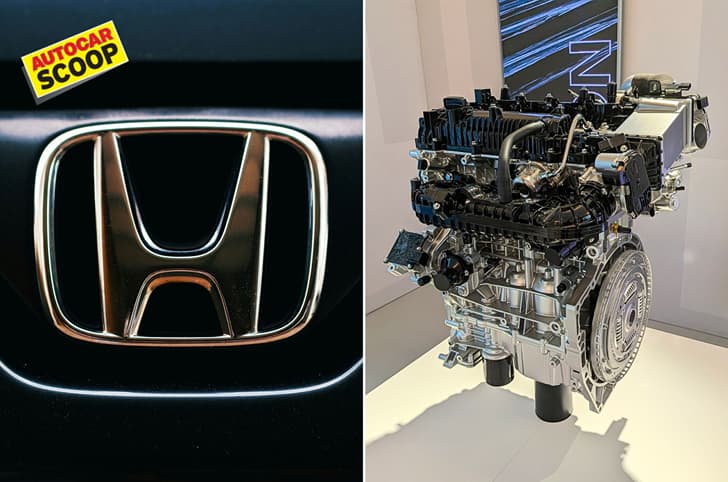
Honda Cars India is in talks to source a 1.2-litre engine from Horse Powertrain — a Renault-Geely joint venture with Saudi Aramco as a shareholder — for an upcoming compact SUV priced between ₹9 lakh and ₹12 lakh, with an October 2028 start of production discussed as a project target, according to an exclusive report by Autocar India. The engine family would offer petrol, hybrid, and CNG variants, making this one of the most ambitious multi-fuel strategies Honda has attempted in the Indian mass market. Nothing has been confirmed by Honda Cars India, which declined to comment on specific partners or powertrain programmes.
This represents a significant strategic shift. Engines have historically been Honda's most guarded intellectual property, and outsourcing a core powertrain to a third-party joint venture would once have been unthinkable for the brand. That it is even under evaluation signals how seriously Honda is taking the cost and speed pressures of competing in India's sub-₹12 lakh compact SUV segment.
How Does Honda's Planned Compact SUV Compare With Current Rivals?
The compact SUV segment below ₹12 lakh is already crowded, and Honda is arriving late. Here is how the planned Honda compact SUV stacks up against the most relevant existing and upcoming rivals on the key parameters buyers in this segment care about:
| Model | Hybrid Type | Engine | ARAI Mileage | Price (Ex-showroom) | Key Weakness |
|---|---|---|---|---|---|
| Honda Compact SUV (planned) | Mild hybrid (under evaluation) | 1.2L Horse Powertrain (sourced) | Not yet rated | ₹9–12 lakh (target) | Unconfirmed specs; 2028 launch |
| Maruti Suzuki Fronx 1.0T Smart Hybrid | Mild hybrid | 1.0L turbo petrol + 12V belt-ISG | 21.79 km/l (ARAI) | ₹7.51–13.04 lakh | Battery only assists; cannot drive on electric alone |
| Hyundai Bayon (upcoming) | Mild hybrid (expected) | 1.2L turbo petrol + 48V system | Not yet rated | ~₹10 lakh (estimated) | Global debut pending; India specs unconfirmed |
| Maruti Suzuki Grand Vitara Strong Hybrid | Strong hybrid | 1.5L Atkinson + dual electric motors | 27.97 km/l (ARAI) | ₹17.99–19.99 lakh | Price premium; smaller boot due to battery pack |
| Honda City e:HEV | Strong hybrid | 1.5L + dual electric motors | 27.26 km/l (ARAI) | ₹20.99 lakh | Premium pricing; sedan, not SUV |
A mild hybrid is a system where the battery and electric motor assist the combustion engine during acceleration and recover energy during braking, but the vehicle cannot propel itself on electric power alone. Maruti Suzuki markets its version as Smart Hybrid. A strong hybrid can drive on electric power alone for meaningful distances at low speeds, without external charging.
The Horse Powertrain engine being evaluated for Honda's compact SUV has not been officially classified as mild or strong hybrid by either company for this application. Given the ₹9–12 lakh price target, a 48V mild-hybrid assist — similar to what Maruti uses in the Fronx and what Hyundai is expected to deploy in the Bayon — is the more commercially viable option. A full strong-hybrid system at that price point would require either significant localisation or a loss-leading strategy.
What Is Horse Powertrain and Why Does It Matter for India?
Horse Powertrain is a joint venture between Renault Group and Geely, with Saudi Aramco holding a stake, established to develop and supply combustion and hybrid powertrains to multiple automakers. The company already operates in India: the new Renault Duster, which launched on October 17, 2026, uses a Horse 1.8-litre hybrid powertrain, making it the fourth model in the midsize SUV segment to offer a strong-hybrid option in India.
Horse Powertrain's ambitions extend beyond supplying Renault. The company is understood to be planning a local engine manufacturing plant. Fully localised production would give any Indian automaker sourcing from Horse a meaningful cost advantage — the difference between a hybrid variant being priced at ₹10 lakh versus ₹13 lakh. For Honda, which needs to compete with Maruti's scale-driven cost efficiencies, this localisation path is central to the business case.
The 1.2-litre engine family being discussed is separate from the 1.8-litre unit in the Duster. Horse's portfolio includes the B15 engine (used for representation in Autocar India's report), and the company has experience packaging hybrid systems across different displacement classes. Whether the India-specific 1.2-litre unit will share architecture with any European or Chinese application remains unconfirmed.
Why Is Honda Outsourcing Engines at All?
Honda faces a structural problem in India. Its current 1.2-litre and 1.5-litre naturally aspirated petrol engines were developed for a different era of emission and efficiency norms. Meeting tightening CAFE (Corporate Average Fuel Economy) Phase 3 targets — expected to tighten further through the late 2020s — while also offering CNG variants (which require different combustion tuning) and a hybrid option is expensive to do in-house, especially for a brand with Honda's relatively modest India volumes.
Developing a new multi-fuel engine family from scratch for a price-sensitive segment where the volume leader (Maruti Suzuki) has decades of localisation advantage would consume time and capital that Honda may not be willing to commit. Sourcing a ready, multi-fuel engine family from Horse Powertrain solves both the technology and timeline problem simultaneously.
This is part of a broader restructuring of Honda's India development model. Autocar India reports that Tata Technologies is being engaged for vehicle design and engineering execution, while TCS is expected to work on the infotainment system. Honda is targeting a reduction in its full model development cycle from approximately 49 months to around 30 months. These are targets for the proposed process, not confirmed timelines for the compact SUV specifically.
Honda's spokesperson told Autocar Professional: "Honda is continuously strengthening its product development capabilities in India, with the objective of developing products that are increasingly relevant to Indian customers while also using India's growing engineering capabilities."
How Does This Fit Honda's Wider India Strategy in 2026?
Honda's India 2026 product offensive is already underway at the premium end. CNBC TV18 reported that Honda launched the 2026 City facelift at ₹11.99 lakh (ex-showroom) in May 2026 and simultaneously revealed the ZR-V Hybrid SUV for the Indian market. The ZR-V — a strong hybrid with a 2.0-litre four-cylinder petrol engine paired with an e-CVT, producing 181 bhp and 315 Nm — is positioned as Honda's flagship SUV in India, expected to be priced in the ₹45–50 lakh range and imported as a CBU.
The City e:HEV strong-hybrid variant, priced at ₹20.99 lakh in ZX+ trim, remains Honda's most accessible strong-hybrid offering in India. Its ARAI-claimed fuel efficiency of 27.26 km/l is competitive with the Maruti Suzuki Grand Vitara strong hybrid's 27.97 km/l ARAI claim, though both figures are manufacturer claims and real-world efficiency typically falls 15–25% lower depending on driving conditions.
The planned compact SUV would fill a gap at the bottom of Honda's India pyramid — a volume-driving, first-car-buyer product that Honda currently does not have. Honda's own spokesperson acknowledged the opportunity: the company sees potential in attracting buyers who currently own Honda two-wheelers but choose rival car brands for their first four-wheeler purchase.
Separately, Honda has dropped the PF2 platform project that was expected to underpin the next-generation City sedan and Elevate SUV, per Autocar India. The company declined to confirm this, but stressed that both City and Elevate "will continue to play an important role" in its India business. The compact SUV under evaluation is understood to use an existing Honda platform from Indonesia, not PF2.
What Is Maruti Suzuki Doing in the Same Space?
Maruti Suzuki's mild-hybrid compact SUV strategy is already mature and scaling. The Fronx 1.0-litre turbo petrol with Smart Hybrid technology — a mild-hybrid system defined as a 12V belt-integrated starter-generator (ISG) that recovers braking energy and provides torque assist during acceleration — is priced from ₹7.51 lakh and claims 21.79 km/l (ARAI). The Smart Hybrid system cannot drive the Fronx on electric power alone; it reduces fuel consumption at the margins, primarily through idle stop-start and mild torque fill.
Maruti is also accelerating its own development timelines. Autocar India reported that Suzuki is aiming to halve new model development time by 2030, with Maruti Suzuki already pushing to cut its cycle from 48 months to 36 months as it prepares nine new models. A 3-row Grand Vitara is expected in October 2026, and Suzuki has confirmed it is developing a range-extender hybrid (REEV Light) with plug-in capability for compact cars — a system that Autocar India reported in 2024 was being developed for smaller vehicles.
If Maruti deploys a REEV or stronger hybrid system in a compact SUV before Honda's 2028 launch, Honda's window of differentiation narrows significantly. The Fronx's weakness — its mild-hybrid system offers modest real-world efficiency gains compared to a strong hybrid — is exactly the gap Honda could exploit if it brings a genuine hybrid to the ₹10–12 lakh bracket. But that requires Horse Powertrain's system to be a true strong hybrid, not just a 48V mild-hybrid assist, and at that price point, the economics are challenging.
For buyers currently considering hybrid cars under ₹15 lakh, the Fronx Smart Hybrid is currently one of the few options. Honda's compact SUV, if it arrives with a genuine hybrid system, could meaningfully expand that category.
How Does the Hyundai Bayon Factor In?
Hyundai is working on a new Bayon expected to debut globally by year-end 2026, with India sales starting in early 2027 — well ahead of Honda's 2028 target. Rushlane reported that the new Bayon is expected to use a 1.2-litre turbo petrol four-cylinder engine integrated with a 48V mild-hybrid setup for compliance with stricter emission norms. A full hybrid option — reportedly a 140 hp powertrain with a 7-speed dual-clutch automatic — may be offered in Europe but its India availability is unconfirmed.
In India, the Bayon is expected to be positioned between the Venue and the Creta, at approximately 4,200 mm in length, with an estimated price around ₹10 lakh. If Hyundai brings the 48V mild-hybrid variant to India at that price, it would arrive roughly 12–18 months before Honda's compact SUV and occupy the same competitive space.
The Bayon's advantage is timing and Hyundai's established India service network. Its weakness, if it arrives only as a mild hybrid, is that it offers no meaningful electric-only driving capability — the same limitation as the Maruti Fronx Smart Hybrid. Honda's compact SUV, arriving later, would need to offer something more substantive to justify the wait.
What Platform Will Honda Use, and Does It Matter?
The compact SUV is understood to be under evaluation on an existing Honda platform used in Indonesia. Honda has not confirmed which platform this is or whether it would be modified for Indian conditions. The drop of the PF2 platform — which was expected to underpin next-generation City and Elevate — adds uncertainty about Honda's medium-term product architecture in India.
Platform choice matters for buyers because it affects structural rigidity, safety ratings, and the ease of integrating hybrid powertrains. A platform designed primarily for naturally aspirated petrol engines may require more engineering work to accommodate a hybrid battery pack and power electronics, adding cost or compromising boot space — a known weakness of strong-hybrid systems. The Maruti Suzuki Grand Vitara strong hybrid, for instance, has a smaller boot than its mild-hybrid sibling due to battery pack placement.
Honda's new development model — where Tata Technologies handles design and engineering execution, TCS manages infotainment, and Honda retains overall performance targets and final validation — is designed to compress the timeline. The 30-month development cycle target, if achieved, would be genuinely competitive with global benchmarks. Whether it is achievable for a first-time application of this model remains an open question.
Should You Wait for Honda's Compact SUV, or Buy Now?
The honest answer is that waiting until 2028 for a product that has not been confirmed is not a rational buying strategy for most people. The compact SUV is under evaluation, not announced. The engine sourcing is in talks, not contracted. The platform is under consideration, not finalised. Honda has explicitly declined to confirm any of these details.
For buyers in the ₹9–12 lakh compact SUV segment today, the realistic hybrid options are limited. The Maruti Fronx Smart Hybrid (mild hybrid, ₹7.51–13.04 lakh) is the most accessible hybrid-badged compact SUV. The Maruti Grand Vitara strong hybrid (₹17.99–19.99 lakh) is a genuine strong hybrid but sits above this price band. The Honda City e:HEV (₹20.99 lakh) is a strong hybrid sedan, not an SUV. For those specifically looking at hybrid mid-size SUVs under ₹25 lakh, the Grand Vitara and Toyota Urban Cruiser Hyryder strong hybrids remain the benchmarks.
If Honda's compact SUV does arrive in 2028 with a genuine hybrid system — not just a 48V mild-hybrid assist — at ₹10–12 lakh, it would be a landmark product. No strong hybrid currently exists at that price in India. But two years is a long time in a market moving as fast as India's compact SUV segment, and Maruti's REEV Light development and Hyundai's Bayon timeline both suggest the competitive space will look very different by then.
What Are the Honest Risks in Honda's Plan?
Several things could go wrong, and buyers deserve to know them.
First, the Horse Powertrain sourcing is in talks, not signed. Honda has a history of engine development being central to its identity, and internal resistance to outsourcing this core component poses a real risk to the timeline.
Second, the October 2028 start-of-production target is a project discussion point, not a committed date. Honda's previous India product timelines have slipped — the Elevate, for instance, took longer to arrive than initially signalled.
Third, the Indonesia platform may not be optimised for Indian road conditions, CNG fuel quality, or the specific hybrid integration Honda needs. Adapting it could add time and cost.
Fourth, if the hybrid variant ends up being a 48V mild-hybrid rather than a strong hybrid, the differentiation from the Fronx Smart Hybrid and Hyundai Bayon becomes primarily about brand and design rather than powertrain technology.
Fifth, Maruti Suzuki's scale advantage in the sub-₹12 lakh segment is formidable. The Fronx sold over 15,000 units per month at its peak, supported by Maruti's 4,000+ dealership network. Honda's India dealer network is significantly smaller, and building volume in this segment requires service reach that Honda currently lacks at the entry level.
For buyers tracking hybrid cars under ₹25 lakh or specifically AWD and hybrid SUVs under ₹20 lakh, the Honda compact SUV is worth watching — but not worth waiting for without a confirmed launch date and specification sheet.
The Bottom Line
Honda's planned 1.2-litre compact SUV, if it arrives with a genuine hybrid powertrain at ₹9–12 lakh in 2028, would be the most disruptive product in the segment since the Maruti Grand Vitara strong hybrid redefined efficiency expectations in the midsize SUV space. The Horse Powertrain partnership is credible — the Renault Duster's 1.8-litre hybrid launch in October 2026 proves the company can deliver in India. The multi-fuel strategy (petrol, hybrid, CNG) is exactly what the segment needs.
But the gap between "in talks" and "on sale" is wide, and Honda's track record in India's mass-market segment is thin. Maruti Suzuki is not standing still — it is cutting development cycles, expanding its Smart Hybrid lineup, and developing next-generation REEV technology for compact cars. Hyundai's Bayon is likely to arrive before Honda's compact SUV and will occupy much of the same mental real estate with buyers.
Honda's compact SUV is the most interesting unconfirmed product in India's hybrid compact SUV space. Whether it becomes the most important one depends on decisions that Honda has not yet made public.
Sources
- Honda to source Horse 1.2-litre engine for new compact SUV | Autocar India
- Honda launches 2026 City at ₹12 lakh, showcases ZR-V Hybrid for premium SUV space | CNBC TV18
- Honda ZR-V hybrid is coming to India — 22.79 kmpl mileage and ADAS at what price? | Business Today
- New Hyundai Bayon Rendered Based On Spy Shots – Could Debut 1.2 Turbo, Hybrid | Rushlane
- Honda Cars India – Official Site
- Maruti Suzuki Grand Vitara – Official Site
- Maruti Suzuki Fronx – Official Site