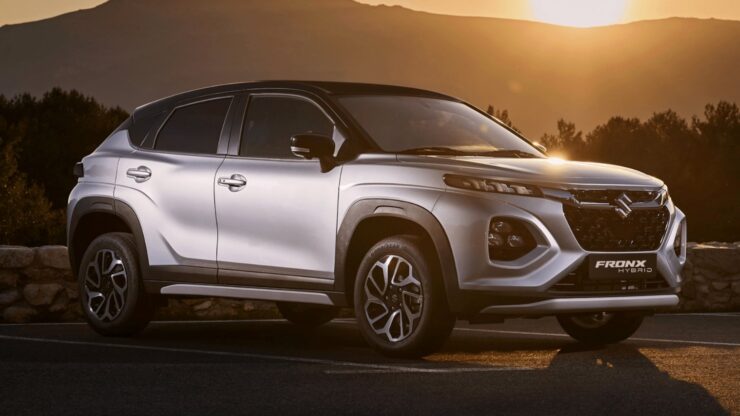

Suzuki has confirmed a compact-car series hybrid and a plug-in REEV Light range-extender, targeting ~29% CO₂ reduction, but no India model or launch date is confirmed yet.
Will Suzuki's New Series-Hybrid and Plug-In Range-Extender Compact Cars Challenge Maruti in India 2026?
Suzuki Motor Corporation has officially confirmed development of a series-hybrid system for compact cars, with a subsequent plug-in range-extender variant called REEV Light — a move that could eventually reshape Maruti Suzuki's sub-₹15 lakh segment strategy, though no India launch date, pricing, or specific model has been announced as of September 2026.
The announcement matters because Maruti Suzuki's current hybrid portfolio sits at two extremes: mild-hybrid Smart Hybrid technology in affordable compact cars, and Toyota-sourced strong hybrids in mid-size and larger vehicles that carry a significant price premium. The series-hybrid and REEV Light systems are being developed explicitly to fill the gap between those two poles — offering near-EV driving characteristics in a compact, cost-conscious package.
Before diving into what these systems mean for India, here is how Suzuki's new powertrains compare with the hybrid technologies already on sale in the Indian market today:
| Powertrain | Type | How it works | External charging | Approx. India price range | Key weakness |
|---|---|---|---|---|---|
| Maruti XL6 Smart Hybrid (1.5L) | Mild hybrid | Integrated starter-generator assists engine; cannot drive on battery alone | No | ₹11.6 – ₹14.6 lakh (ex-showroom, est.) | Minimal real-world fuel economy gain over pure petrol; battery only assists, never propels |
| Maruti Grand Vitara Strong Hybrid | Strong hybrid (Toyota-sourced) | Engine + motor can drive wheels independently; EV mode at low speeds | No | ₹17.9 – ₹19.7 lakh (ex-showroom, est.) | Price premium of ~₹3–4 lakh over petrol variant; boot space reduced by battery pack |
| Maruti Invicto Strong Hybrid | Strong hybrid (Toyota-sourced) | Series-parallel system; EV-only mode possible | No | ₹24.8 – ₹28.9 lakh (ex-showroom, est.) | Expensive for an MPV; no plug-in option |
| Toyota Urban Cruiser Hyryder Strong Hybrid | Strong hybrid | Series-parallel; EV mode at low speeds | No | ₹19.7 – ₹25.1 lakh (ex-showroom, est.) | Similar price premium to Grand Vitara; no PHEV option |
| Honda City e:HEV | Strong hybrid | Primarily series layout; engine drives wheels at high speed | No | ₹19.5 – ₹21.0 lakh (ex-showroom, est.) | Sedan body limits SUV-hungry buyers; no plug-in |
| Suzuki Series HEV (announced) | Strong hybrid (series layout) | Motor drives wheels; engine generates electricity only | No | Not announced | No confirmed India model, price, or launch date |
| Suzuki REEV Light (announced) | Plug-in hybrid / range-extender | Motor drives wheels; engine generates electricity; external charging added | Yes | Not announced | Battery size, EV range, and India timeline all unconfirmed |
Prices are manufacturer/dealer estimates current as of September 2026. ARAI-certified mileage figures for Suzuki's new systems have not been released.
What exactly is Suzuki's series-hybrid system, and how is it different from what Maruti already sells?
A series hybrid is defined as a powertrain in which the electric motor is the sole source of drive to the wheels, while the internal combustion engine functions exclusively as a generator to produce electricity. This differs fundamentally from the series-parallel strong hybrids that Maruti currently sells in the Grand Vitara, Victoris, and Invicto — where the petrol engine can contribute directly to wheel propulsion under certain conditions.
Suzuki confirmed the system in late September 2026, stating: "For compact cars, we are preparing a series HEV that generates electricity from fuel and drives on the motor." The company says the driving experience should feel closer to an EV, with the motor's instant torque delivery and the engine operating at its most efficient point as a generator rather than being forced to match road-speed demands.
For Indian buyers, this distinction carries real weight. The mild-hybrid Smart Hybrid system in models like the XL6 (petrol, 1.5L) and Fronx (1.0L turbo) uses a small battery and integrated starter-generator to assist the engine but cannot drive the wheels independently. Fuel economy gains from Smart Hybrid are genuine but modest — typically 5–10% over a comparable non-hybrid petrol engine in real-world urban driving. A series hybrid can deliver meaningfully larger efficiency gains because the engine always runs in its optimal rev range.
Suzuki estimates that its compact-car series hybrid could reduce CO₂ emissions by around 29% compared with its 2022 reference point — equivalent to roughly 300 kg over 10,000 km. The company has not yet released an ARAI-certified fuel efficiency figure, a battery capacity, or a motor output rating. Until those numbers are published and independently tested, the 29% CO₂ claim should be treated as a manufacturer projection, not a verified real-world result.
What is REEV Light, and why does Suzuki think a "right-sized" battery matters?
REEV Light is a range-extender electric vehicle with external charging capability, built on the same series-hybrid architecture but with an added plug-in socket and a battery sized specifically for the vehicle's intended daily use case. The name signals Suzuki's deliberate departure from large-battery EV thinking.
Suzuki's stated rationale is straightforward: "It will become a 'REEV Light' that does not carry an oversized battery yet lets you drive without worrying about the remaining charge." In practice, this means a buyer who drives 30–40 km daily in a city could charge the car overnight and run entirely on electricity for most trips. On longer journeys, the petrol engine kicks in as a generator to extend range — eliminating the range anxiety that holds back pure EV adoption in India, where highway charging infrastructure remains patchy.
This approach suits the Indian market well. A full BEV in the compact segment — say, the Maruti e Vitara — requires a large battery that adds significant weight and cost. REEV Light's smaller battery keeps the vehicle lighter and cheaper to produce, while the petrol generator backstop removes the charging-infrastructure dependency. The trade-off is that REEV Light is not a zero-emission vehicle; it still burns petrol on longer runs, and its real-world electric-only range will depend entirely on the battery capacity Suzuki eventually specifies, a figure not yet disclosed.
Business Today noted that Suzuki has been relatively late to the EV race compared with Chinese rivals and is betting on range-extender technology as a pragmatic bridge — one that suits markets like India where charging infrastructure, electricity grid reliability, and consumer range anxiety are all genuine purchase barriers.
Which Maruti models could get these systems, and what has actually been confirmed?
Autocar India reported as far back as 2024 that Maruti Suzuki was developing an in-house series-hybrid system for smaller cars, and identified the Fronx and Baleno as potential candidates. The same report named the 1.2-litre Z12E three-cylinder engine as a likely generator unit for the system.
Suzuki's September 2026 announcement confirmed the development of both the series hybrid and REEV Light, but did not confirm which specific models will receive these powertrains, whether the Z12E engine will be used, or when Indian customers can expect to see them in showrooms. The Fronx and Baleno therefore remain possibilities based on earlier reporting — not announced products.
If you are shopping for a compact hybrid today, neither the series hybrid nor REEV Light is a near-term option. The Fronx currently sold in India is a mild hybrid (Smart Hybrid, 1.0L turbo), which means its 48V-style belt-integrated starter-generator assists the engine but provides no electric-only driving. The Baleno similarly uses a Smart Hybrid setup. These are the cars you can buy now; the series-hybrid Fronx or Baleno, if confirmed, would be a different product at a likely higher price point.
For buyers interested in what is available today in the hybrid compact space, our guide to best hybrid cars under ₹15 lakh in India covers the current options honestly, including the limitations of mild-hybrid technology in this price band.
How does the series-hybrid concept compare with Honda's City e:HEV, which already uses a similar layout?
The Honda City e:HEV (strong hybrid) is the closest production reference point for what Suzuki is proposing. Honda's i-MMD system is primarily a series hybrid — the electric motor drives the wheels in most urban and suburban conditions, with the petrol engine acting as a generator. At higher highway speeds, a lock-up clutch allows the engine to drive the wheels directly for efficiency. Honda does not call it a "series hybrid" in its marketing, but the operating principle mirrors what Suzuki is describing for its compact-car system.
The City e:HEV is priced at approximately ₹19.5–21.0 lakh (ex-showroom), carries an ARAI-certified fuel efficiency of around 26.5 km/l (manufacturer claim), and delivers a genuinely EV-like urban driving experience. Its weakness in the Indian context is its sedan body — in a market that has shifted decisively toward SUVs and hatchbacks, the City e:HEV competes in a shrinking segment.
If Suzuki's series hybrid lands in the Fronx — a compact SUV that already sells in large volumes — it would offer a similar driving character to the City e:HEV in a body style that Indian buyers currently prefer, at a lower price point. That is the competitive threat Honda should be watching. Whether Suzuki can price a series-hybrid Fronx below ₹15 lakh is the critical unknown; the cost of adding a motor, generator-engine integration, and battery management system to a compact car is exactly the engineering challenge Suzuki acknowledges it is working to solve.
Where does this leave Maruti's existing strong-hybrid lineup — the Grand Vitara, Victoris, and Invicto?
Maruti's current strong hybrids occupy a different price and size tier from the compact cars being discussed for the series-hybrid programme. These vehicles are unlikely to be displaced by REEV Light; they serve buyers who want a mid-size SUV or a three-row MPV with strong-hybrid efficiency.
The Grand Vitara strong hybrid carries an ARAI-claimed fuel efficiency of approximately 27.97 km/l (manufacturer claim), making it one of the most fuel-efficient non-plug-in SUVs in India. Its honest weakness is price: the strong-hybrid variants start at roughly ₹17.9 lakh, representing a premium of around ₹3–4 lakh over the equivalent petrol Grand Vitara. Boot space is also reduced compared with the petrol variant because of the battery pack placement. For buyers who want a hybrid mid-size SUV under ₹25 lakh, the Grand Vitara strong hybrid is a serious contender, but the price premium demands a clear payback calculation based on annual mileage.
The Invicto strong hybrid, positioned as a premium MPV, competes with the Toyota Innova Hycross strong hybrid — effectively the same powertrain in a different body. For buyers looking at 7-seater hybrid MUVs under ₹30 lakh, both are worth evaluating, though neither is cheap.
Suzuki's series-hybrid programme could eventually give Maruti a third tier: a genuinely strong hybrid (motor-driven, not just assisted) in compact cars priced below ₹15 lakh. That would fill a meaningful product gap — but it remains a future possibility, not a present reality.
Is the competitive threat from JSW Motors' plug-in hybrid Combat SUV relevant here?
Tangentially, yes. Mint reported that JSW Motors is planning to launch the Combat SUV — a plug-in hybrid based on Chery's Jetour T2 — before Diwali 2026, with 14 more new-energy models to follow over four years. The Combat is expected to be priced between ₹15 lakh and ₹50 lakh, though official pricing has not been announced.
The JSW Combat is a plug-in hybrid (PHEV), meaning it charges from the grid and can drive on electricity alone for a defined range before the combustion engine takes over. This differs from Suzuki's REEV Light, which uses the engine as an on-board generator rather than a direct drive source. For buyers, the practical difference is significant: a PHEV like the Combat typically has a larger battery and longer electric-only range than a range-extender, but also costs more and depends more heavily on charging access.
JSW's ambition is notable, but the Combat's pricing, specifications, and real-world performance remain unverified. For buyers considering AWD and hybrid SUVs under ₹20 lakh, the Combat's eventual positioning will matter — but it is not yet a product you can walk into a showroom and buy.
What should Indian buyers watch for as these technologies develop?
Several specific data points will determine whether Suzuki's series hybrid and REEV Light are genuinely competitive in India:
ARAI-certified fuel efficiency. Suzuki's 29% CO₂ reduction claim is a manufacturer projection against a 2022 baseline. The number that matters for Indian buyers is the ARAI-certified km/l figure, which will allow direct comparison with the Grand Vitara strong hybrid (~27.97 km/l, ARAI claim) and the Honda City e:HEV (~26.5 km/l, ARAI claim). Real-world figures from independent tests typically run 15–25% below ARAI claims in mixed Indian driving conditions.
Battery capacity and electric-only range for REEV Light. Suzuki has not disclosed either figure. A battery that delivers 40–50 km of electric-only range would cover the daily commute of most Indian urban buyers without touching the petrol generator. A battery sized for only 20–25 km would be less compelling, especially if the price premium over a mild-hybrid compact is significant.
Price positioning. The entire strategic logic of the series-hybrid programme rests on Suzuki's ability to deliver it at a lower cost than a conventional strong hybrid. If a series-hybrid Fronx or Baleno is priced above ₹14–15 lakh, it competes directly with the entry-level Grand Vitara strong hybrid — a much larger and better-equipped vehicle. Suzuki's engineers have acknowledged cost and packaging as central challenges; the outcome of that engineering work will determine whether this technology reaches the mass market or remains a premium add-on.
Model confirmation for India. Suzuki has been careful not to commit specific Indian nameplates to either system. Maruti Suzuki's product planning decisions are influenced by local manufacturing costs, supplier ecosystems, and government policy — including any future GST or road-tax concessions for strong hybrids or PHEVs that individual states may introduce. Until Maruti officially announces a model, buyers should treat all candidate-model speculation as informed conjecture.
Timeline. "2026" in the article's title refers to the announcement year, not a launch year. Suzuki's language — "we are preparing" — suggests these systems are in development, not production-ready. A realistic India launch for a series-hybrid compact, if confirmed, is more likely in the 2027–2028 timeframe based on typical development-to-production cycles.
How does this fit into Maruti Suzuki's broader electrification roadmap?
Maruti Suzuki's current electrification strategy has three layers. The first is Smart Hybrid mild-hybrid technology, which uses a lithium-ion battery and integrated starter-generator to provide torque assist and regenerative braking, but without the ability to drive the wheels on electricity alone. This is available across several models including the XL6 (1.5L petrol) and Fronx (1.0L turbo) and keeps prices accessible.
The second layer is Toyota-sourced strong hybrids in the Grand Vitara, Victoris, and Invicto — capable of EV-mode driving at low speeds, with significantly better fuel efficiency than mild hybrids, but at a price premium that puts them beyond the reach of most compact-car buyers.
The third layer is full electric, represented by the e Vitara, which targets buyers ready to commit to battery-electric ownership.
The gap between layers one and two — a genuinely motor-driven hybrid in a compact car priced below ₹15 lakh — is exactly where Suzuki's series-hybrid programme is aimed. If Maruti can deliver it, it closes the most significant hole in its hybrid lineup and gives buyers a credible alternative to the Toyota Urban Cruiser Hyryder strong hybrid (priced from approximately ₹19.7 lakh) without requiring them to step up to a mid-size SUV.
For buyers currently evaluating best hybrid cars under ₹25 lakh or best hybrid MPVs under ₹15 lakh, the current market offers real products with verified specifications. Suzuki's new systems, however promising, are not yet among them.
What is the bottom line for a buyer making a decision today?
Suzuki's series-hybrid and REEV Light announcements are strategically significant and technically interesting, but they are not yet buying decisions. No India model has been confirmed, no price has been announced, no ARAI figure exists, and no launch timeline has been committed to.
For buyers who need a hybrid compact car today, the honest options are: the Maruti XL6 Smart Hybrid (mild hybrid, real-world fuel economy improvement is modest), the Honda City e:HEV (strong hybrid, excellent efficiency but sedan body), or — if budget stretches — the Maruti Grand Vitara strong hybrid or Toyota Urban Cruiser Hyryder strong hybrid in the mid-size SUV segment.
Suzuki's announcement signals two things for the market right now. First, Maruti's compact-car hybrid ambitions go well beyond the current Smart Hybrid mild-hybrid technology — which should reassure buyers that the brand is not standing still. Second, it raises the question of whether waiting 12–24 months for a confirmed series-hybrid compact makes sense versus buying a proven mild-hybrid or strong-hybrid product today.
The answer depends on your annual mileage, your daily commute length (critical for REEV Light's value), and your tolerance for uncertainty. A buyer covering 20,000 km per year in urban traffic has the most to gain from a series hybrid's efficiency advantage. A buyer doing 8,000 km per year on mixed roads will find the payback period on any hybrid premium — mild, strong, or series — difficult to justify on fuel savings alone.
Watch for Maruti Suzuki's official product announcements in 2027. Until then, the series hybrid and REEV Light are the most interesting compact-car powertrain story in India — but they are a story, not yet a car you can buy.
Sources
- Suzuki's Hybrid Plan: Compact Cars To Get Strong Hybrid And Plug-In Range Extender — GaadiWaadi
- Suzuki confirms range extender hybrid with plug-in capability for compact cars — Autocar India
- Suzuki bets on compact range extender electric vehicles to catch up in the EV race — Business Today
- JSW Combat SUV to launch in India before Diwali, 14 new-energy models planned over 4 years — Mint
- Maruti Suzuki Grand Vitara — Official Model Page
- Maruti to launch Fronx Hybrid in 2025 — Autocar India (2024 scoop)